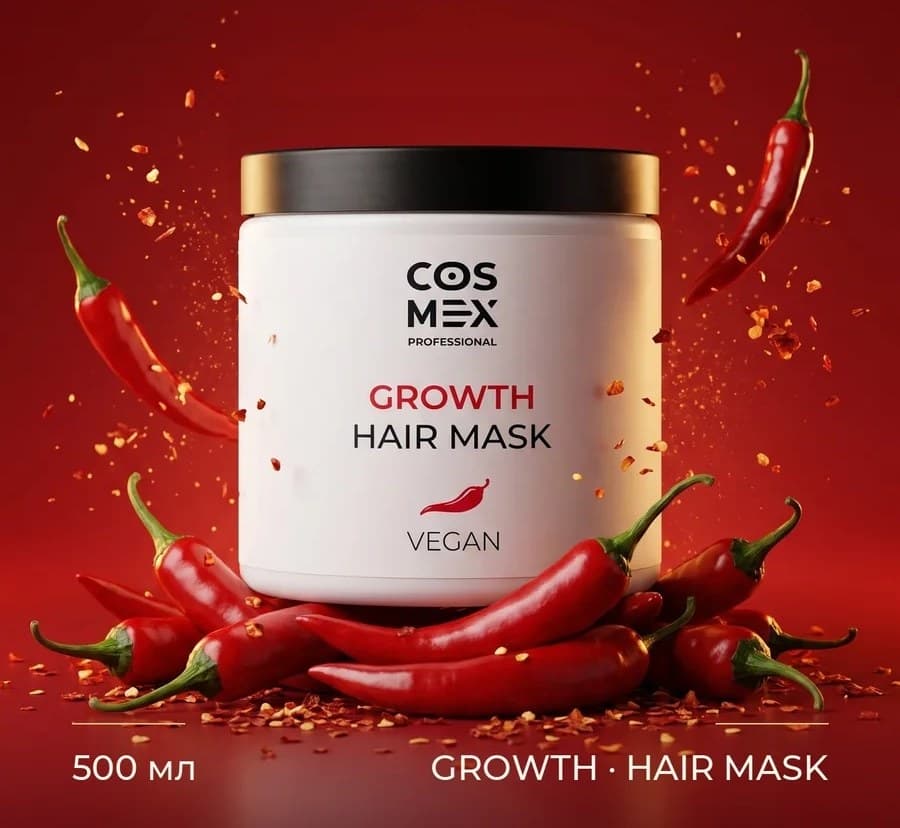
"I bought a mask, use it every day, and my hair still feels like straw" — sound familiar? A hair mask is probably the most misunderstood product in the bathroom. People slather it on the roots, leave it on "extra long for good measure," pile on nothing but protein, and then wonder why their hair has gone stiff. Let's sort this out calmly and clearly: how a mask differs from a conditioner, what types are out there, how often and how to use them properly — without stiff hair or wasted money.
Quick summary if you're short on time
- A mask is a more intensive, deeper treatment than a conditioner: it's more concentrated and needs more time to work. A conditioner is for every wash; a mask is used as a course of treatment.
- Masks are categorised by purpose: moisturising (hydration, softness), protein/restorative (density, strength), and scalp masks (cleansing and balancing at the roots).
- Apply to the lengths and ends, keeping away from the roots. Roots don't need a nourishing mask.
- Leaving it on longer than stated serves no purpose — hair absorbs what it can within the recommended time, and anything extra just rinses off.
- The real secret to beautiful hair is balancing protein and moisture. Too much protein makes hair stiff; too much moisture alone makes it limp. The two should be alternated.
- Results come from consistency over a course of use, not one jar in a single session.
Now let's go deeper.
How a mask differs from a conditioner
They're often confused, yet they serve very different roles. To put it simply:
- A conditioner is for every wash. Its job is to quickly smooth the cuticle after shampooing, eliminate static, and make detangling easier. Apply, leave for a moment, rinse. It's your basic everyday care step.
- A mask is about depth. The formula is more concentrated, active ingredients are more abundant, and it stays on longer to actually get to work. It's not an everyday product — it's an intensive, course-based treatment for when hair needs more than just smoothed cuticles.
A simple analogy: a conditioner is like washing your face and applying a morning moisturiser; a mask is like a weekly visit to an aesthetician. One doesn't replace the other — a conditioner smooths, a mask restores. Ideally, your routine includes both, each doing its own job.
Types of masks: breaking it down by purpose
Masks aren't really defined by the pretty words on the jar, but by what they actually do for your hair. Broadly, there are three main categories.
Moisturising masks. These replenish moisture and lipids, leaving hair soft, elastic, and manageable. They're the go-to for dry, frizzy, or porous hair that lacks water and nourishment. After this type of mask, hair feels smooth, pleasantly weighty, and easier to comb through. It's the most common and most versatile type.
Protein (restorative) masks. Hair is largely made of protein, and when it's damaged — porous, brittle, stretching like elastic when wet — what it's missing is structural support. A protein mask temporarily fills in damaged areas, restoring density and strength. It's a lifesaver for hair after lightening, frequent heat styling, or chemical treatments. That said, it's easy to overdo it — more on that below.
Scalp masks. A separate category entirely: these work at the roots and on the scalp rather than along the lengths. They cleanse, soothe, balance oil production, and help maintain a healthy scalp — and scalp health directly affects how hair grows. If you want to understand the connection between scalp condition and hair growth, we have a dedicated article on hair structure.
The golden rule: balancing protein and moisture
This is the one thing almost no one explains, yet it's fundamental. Healthy hair needs both — protein (structure, strength) and moisture (softness, elasticity). Tipping the balance either way causes damage.
- Too much protein — hair becomes stiff, dry, brittle, and straw-like. The paradox: someone sees brittleness, thinks "I need more repair," applies even more protein, and makes things worse.
- Too much moisture without protein — hair becomes limp, soft and mushy, loses shape, and stretches and breaks easily.
A smart routine, then, means alternating: a restorative (protein) mask builds strength; a moisturising mask restores softness and elasticity. Not one or the other, but both in rotation, listening to what your hair is telling you. Gone stiff? Add moisture. Gone limp and mushy? Add protein. This balance matters more than any particular brand on the jar.

How often to use a mask
The principle here is "as needed, not more is better." Some guidelines:
- Dry, damaged, or porous hair — a moisturising mask 1–2 times a week. These hair types need plenty of nourishment.
- Normal hair — roughly once a week, for maintenance.
- Oily at the roots — apply only to the lengths, no more than once a week; otherwise the roots will feel weighted down.
- Protein masks — less frequently: approximately once every one to two weeks, used as a course rather than an ongoing habit. Think of it as strong medicine, not a daily moisturiser.
Using a nourishing mask every day is generally unnecessary: hair doesn't get a chance to "need" it, product build-up weighs it down, and results actually suffer. A regular schedule works better than flooding hair all at once.
How to apply a mask: step by step
- Wash your hair with shampoo. A mask should be applied to clean hair — on unwashed hair it simply won't do its job. A gentle sulphate-free shampoo is preferable to avoid over-drying (more on why in our article on sulphate-free shampoo).
- Squeeze out excess water. On soaking wet hair, the mask will slide off and be diluted. Blot with a towel so hair is damp but not dripping.
- Apply to the lengths and ends, avoiding the roots. The lengths — the oldest and most damaged part of the hair — are where nourishing masks are needed most. Pay special attention to the ends. Leave the roots and scalp alone (the exception is scalp-specific masks, which are applied directly to the roots).
- Distribute with a wide-tooth comb. A wide-tooth comb helps spread the mask evenly through the lengths without missing patches.
- Leave on for the time stated on the packaging. Typically 5–20 minutes. Warmth (a towel or shower cap) helps the ingredients work a little more effectively — but there's no point leaving it on beyond the recommended time.
- Rinse thoroughly. Incompletely rinsed mask weighs hair down and makes it dirty faster. Rinse until the lengths feel clean and no longer slippery.
Common mistakes
- Applying to the roots. The most frequent mistake. A nourishing mask applied to the scalp at the roots causes greasiness, heaviness, and faster build-up — and does absolutely nothing beneficial for the roots. Nourishment is for the lengths, not the skin.
- "The longer I leave it on, the better." Not true. Hair absorbs what it can within the stated time. A mask left on for two hours won't repair more — it'll simply dry out, and the excess will rinse away. Leave it on for as long as the label says.
- Using only protein, with no moisture. It seems logical: "my hair is damaged, so I'll restore it." But constant protein without moisture makes hair stiff and brittle. Balance and alternation are essential — no single mask type should be used exclusively forever.
- Applying to unwashed hair. On a layer of dust, silicones, and sebum, a mask performs poorly. Cleanse first, then treat.
- Expecting a miracle from one jar. A mask is about a course of treatment and consistency. A single application gives a pleasant softness for a day or two; the cumulative effect builds over weeks.
A note on honest expectations
Let's be fully upfront. A mask does not treat hair in any medical sense, and it doesn't permanently "seal" split ends — a damaged end can only be temporarily smoothed, and the only real fix is a trim. A mask makes hair look and feel better, softer, and stronger; it disguises damage and helps prevent new damage, but it cannot physically grow healthy hair in place of compromised hair.
One more thing: if hair is shedding heavily or its condition has changed noticeably and suddenly, no mask will address the underlying cause. Deficiencies, hormones, and stress can all be at play. A mask is a pleasant form of support in that context, not a solution; the root cause needs to be investigated separately, and with a doctor if necessary.
On the topic of dryness: if hair is persistently dry and frizzy, a mask is only part of the answer. We've covered the causes and solutions in depth in our article on dry hair and moisture.
Cosmex masks and a care system
We design our products so you're not guessing what to put on your hair — you're building a routine around a specific goal. The Professional range includes masks for both key purposes:
- Restoration and density — masks from the Keratin line. These are about protein support: ideal for hair after lightening, heat styling, or chemical treatments when strength and resilience are needed. For a deeper look at this type of care, see our article on keratin hair restoration.
- Moisture and softness — masks from the Hydration line. These are about hydration and elasticity: for dry, frizzy, or tired hair that's lacking water and nourishment.
And here's the key technique the whole approach is built around: alternate protein and moisture. Follow up a restorative Keratin mask with a moisturising Hydration mask next time. That way hair gets both strength and softness without tipping in either direction. This is exactly the balance we described earlier, put into practice.
The entire range is built on a sulphate-free base, made in-house in Almaty, so your care routine won't dry hair out or work against itself. Formulas, sizes, and prices are in our hair masks collection. If you're looking for something lighter for everyday post-wash care, browse our hair conditioners. And if you'd like to first understand what care actually affects and why "shine doesn't equal health," start with our article on hair structure.