

Bleached, dyed, fried with a flat iron — and suddenly your hair is frizzy, tangled, dull, and snapping off. Sound familiar? The good news: this is almost never "damaged beyond repair." It's a compromised keratin structure, and you can genuinely improve it with at-home care. The honest (and less cheerful) news: you can't truly "revive" hair that's already grown out and restore it to its original state — but you can fill in the damage, smooth the surface, and help it break less and look better. Let's break it down plainly: what keratin is, why hair "breaks," and how at-home keratin restoration actually works — no inflated promises.

The short version, if you're in a hurry
- Hair is nearly 90% keratin — a protein. Damage means a broken-down cuticle and protein that's been washed out of the shaft.
- Restoration means filling in the damage, smoothing the cuticle, and strengthening the bonds inside the hair shaft. It's not "glued back forever": grown-out hair doesn't truly regenerate, but new hair grows in healthy.
- The key active ingredients are hydrolyzed proteins, bond-building actives, amino acids, and ceramides in a gentle sulfate-free base.
- Protein without moisture does more harm than good: too much protein makes hair stiff and brittle. That's why keratin care is always alternated with moisturizing treatments.
- Results are cumulative — smoothness and shine build up wash by wash, not after a single use.
- Split ends can't be "fused" back together with a product — they need to be trimmed.
Now, the full picture.
What keratin is and why hair "breaks"
Hair is nearly 90% keratin — a structural protein that gives it shape and strength. The outside of each strand is covered in cuticle scales. On healthy hair, these scales lie flat and tight against one another, like roof tiles — which is why healthy hair looks smooth and shiny and detangles easily.
So what happens when hair is damaged? Bleaching, ammonia-based dyes, heat from blow-dryers and flat irons, sun exposure, and even hard water gradually lift those scales. Once the cuticle is compromised, protein begins to leach out of the shaft. When the protective layer is open and the interior of the hair is depleted, you get the familiar picture: porosity, brittleness, split ends, frizz, and a straw-like appearance. The hair struggles to retain moisture, tangles easily, and looks dull — because an uneven surface reflects light poorly.
That brings us to an honest definition of restoration. It is not "gluing the hair back together permanently" or returning already-grown hair to its original condition — damaged lengths will never fully regenerate. The real goal of care is to fill in the damage, smooth the cuticle, and strengthen the bonds within the shaft, so hair breaks less, retains moisture better, and looks healthy. The truly "new" hair is the growth coming from your roots; your job is to get it to length in one piece.
At-home keratin care: what actually works
First, let's clear up a common source of confusion. There are two distinct things that share a similar name:
- Salon "keratin straightening" is about smoothing and straightening hair with formulas that are "sealed in" with a flat iron. These are often formaldehyde-containing treatments aimed at shape and sleekness, not nourishment.
- At-home keratin care is about nourishment and restoration: replenishing protein and lipids, smoothing the cuticle, and strengthening internal bonds.
We're interested in the second. Here's what genuinely works in a formula:
- Hydrolyzed proteins (keratin, collagen, silk) — protein broken down into small fragments. Small enough to penetrate the shaft and replenish what's been lost, rather than just sitting on the surface as a film.
- Bond-building actives — ingredients that repair the internal bonds within the hair, the very "bridges" that break during bleaching. They work at a deeper level than surface smoothing.
- Amino acids and ceramides — the "mortar" between cuticle scales. They fill in the gaps, even out the surface, and lock in moisture.
- A gentle sulfate-free base — so the restored protein isn't stripped back out with every wash. Harsh sulfates undo half the work.
And the most important nuance that pretty packaging rarely mentions: too much protein without moisture is damaging. Hair overloaded with protein becomes stiff, brittle, and paradoxically more prone to breaking — this is known as "protein overload." That's why smart keratin care is always alternated with moisturizing treatments. More on that below.
Why protein and moisture need to be alternated
Think of hair as a balance between two things: protein (strength, structure) and moisture (elasticity, flexibility). Healthy hair has both in equilibrium.
When hair is damaged, it's lacking protein — so protein-based care restores strength. But if you only apply protein and neglect moisture, the structure becomes too rigid. Hair like this loses its spring and starts snapping under any tension — combing, a hair tie, styling. From the outside, it looks like "my hair went dry and brittle after the treatment," and the easy mistake is to reach for even more protein. That becomes a vicious cycle.
The fix is simple: alternate. Protein-based (keratin) care builds strength; moisturizing care restores flexibility. Together, they maintain the right balance. That's why, within our system, we explicitly recommend alternating the keratin mask with the Hydration line — it's not upselling, it's hair physiology.
The Keratin line from Cosmex
For damaged and porous hair, we developed a keratin shampoo and conditioner — along with a mask made in-house in Almaty. The formula is built on a sulfate-free base with hydrolyzed proteins: the goal is to replenish protein and smooth the cuticle with consistent use. The concentration of actives in the professional formula is higher than in mass-market products, which is why these work as a care system rather than a one-time cosmetic fix.
And an honest disclaimer we'd feel uncomfortable leaving out: we do not promise a "botox effect after the first wash" — that's simply not how it works. Restoration is cumulative: smoothness, manageability, and shine build up wash by wash as proteins fill in the damage and the cuticle gradually flattens. Improvements in manageability are usually noticeable quickly, while stable, consistent smoothness is a matter of a couple of weeks of regular care.
To make sure the keratin line doesn't overload hair with protein, we designed it from the start to work alongside moisturizing care — and we actively recommend alternating it with Hydration. See ingredients and pricing in the Professional catalog.
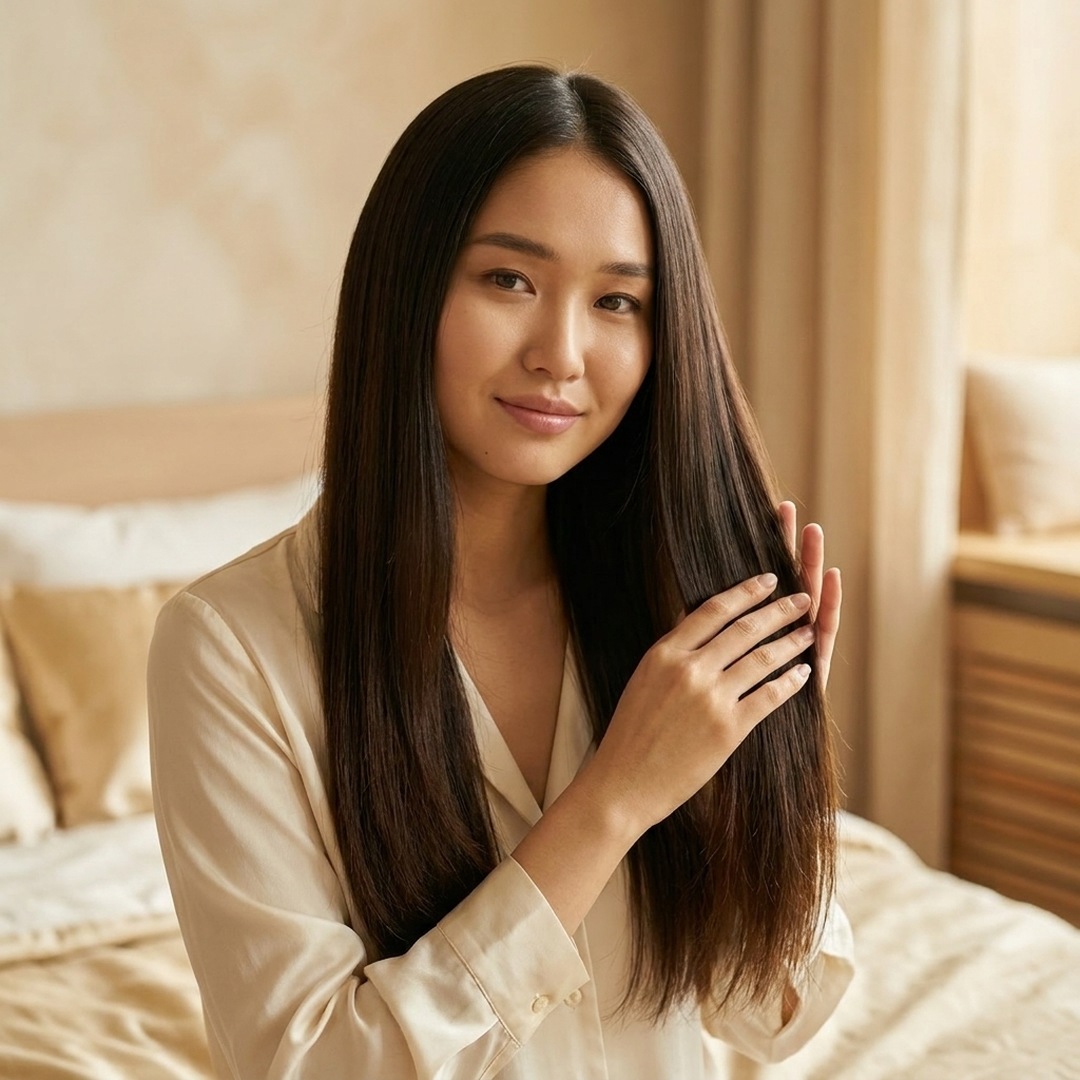
How to care for damaged hair: step by step
- Wash with a gentle sulfate-free shampoo. This is the foundation: harsh cleansing strips out the protein you just restored and lifts the cuticle all over again. A mild base preserves your results.
- Use a protein mask 1–2 times a week. No more often — more isn't better, and protein overload is real. Always alternate with a moisturizing treatment (Hydration).
- Always apply heat protectant before blow-drying or using a flat iron. Without it, any "restorative" mask is fighting damage you're causing right back.
- Lower your styling temperature and reduce the frequency of bleaching sessions. The most underrated step. Restoration only works when you stop damaging your hair faster than you're repairing it.
- Trim split ends regularly. A split end cannot be "fused" back together with a product — that's physically impossible. Left alone, the split travels further up the shaft.
Common mistakes
- Expecting the "botox effect" after one use. Restoration is cumulative. One mask gives manageability — not a new head of hair.
- Loading hair with protein and skipping moisture. The number one mistake. Stiff, brittle hair after a treatment is a sign of protein overload, not protein deficiency. The solution is to restore moisture — not add more protein.
- Washing with a sulfate shampoo "for a deep cleanse." That strips out the restored protein and undoes everything the mask just did.
- Skipping heat protectant. Treating your hair with a mask and then hitting it with a 220° flat iron is one step forward, two steps back.
- Not trimming split ends. Waiting for a product to "seal" them back together. It won't — what's split is split, and the damage creeps higher.
- Continuing to bleach frequently. If you're doing a new bleach session every month, no care routine can keep pace with the rate of damage.
What to expect and when
To avoid disappointment, here's an honest timeline:
- Right away — first washes. Hair feels softer, more manageable, detangles more easily, and frizzes less. This is the effect of cuticle smoothing and conditioning.
- 2–4 weeks of consistent use. Protein restoration accumulates: hair is more uniform along its length, shine is more stable, and noticeably less breakage when combing.
- Ongoing — maintenance. Results hold as long as you're not damaging your hair faster than you're caring for it. New growth coming in is already healthy, provided your routine is consistent.
One important caveat: care improves the condition of existing hair, but it doesn't cancel out damaging factors. If you're regularly bleaching and using hot styling tools without heat protection, results will stall — not because the products aren't working, but because the damage is outpacing the repair.
When it's about more than just care
Let's be fully honest. If your hair isn't just damaged but is actively shedding or has noticeably thinned — that's beyond the scope of keratin treatments and masks. Excessive hair loss can be rooted in iron deficiency, hormonal imbalances, stress, or thyroid issues, and in those cases the first step is bloodwork and a trichologist, with topical care serving only as support. We've covered this in detail in our articles on hair loss and types of alopecia. Keratin restoration addresses the health and strength of the hair shaft — it's not a treatment for hair loss, and we say so plainly.
The Cosmex care system
The keratin line delivers its best results not on its own, but as part of a system:
- Keratin (Keratin line) — protein and cuticle smoothing for damaged, porous lengths.
- Hydration (Hydration line) — moisture, alternated with protein care to keep hair elastic and prevent protein overload.
- Repair (Repair line) — if your primary concern is breakage and split ends, start here.
- Sulfate-free base across the entire range — so restored protein isn't washed out with every shampoo (for more on why this matters, see our article on sulfate-free shampoo).
Ingredients and pricing are in the Professional catalog. And to understand what care actually affects — and why shine doesn't equal health — take a look at our article on hair structure.


