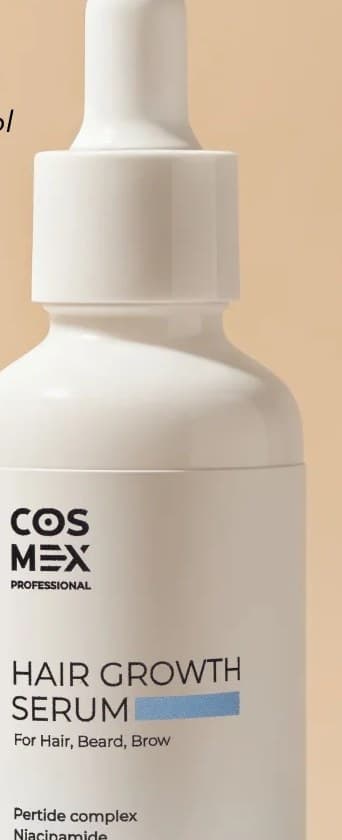
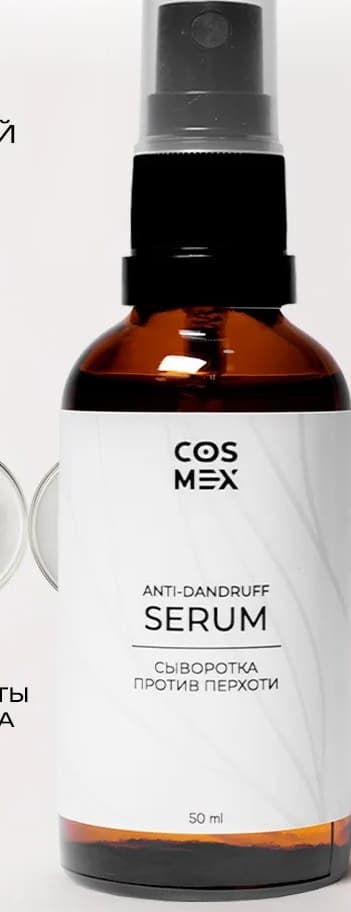
A hair serum is not a "liquid oil" or a "no-rinse shampoo," as marketing copy so often suggests. It's a concentrated leave-in treatment built around an active molecule that seals the cuticle, smooths the hair surface, or targets a specific concern — shine, split ends, fine hair. Below we cover which serum suits which goal, how to choose one, and why a "universal" serum simply doesn't exist.
Quick summary if you're short on time
- A serum is a concentrated leave-in treatment for the lengths. It doesn't cleanse or repair, but it seals the cuticle and addresses a specific concern.
- There's no universal serum: one for shine, another for split ends, a third for fine hair. The formulas are different.
- Applied to damp or dry hair, along the lengths, never at the roots. Dosage — 1–3 drops depending on hair length.
- It doesn't replace a mask or conditioner. A serum is a finishing step, not a core treatment.
What a hair serum actually is
A serum is a liquid or gel-like leave-in product with a high concentration of actives, applied after washing and not rinsed out. Texture ranges from watery to oil-like depending on its purpose.
Unlike a conditioner (which is rinsed out) or a mask (which penetrates the cuticle and is also rinsed out), a serum stays on the hair and works with the cuticle surface throughout the day. It's the finishing step in your routine: shampoo → conditioner/mask → serum → styling.
Main serum categories by goal:
- Shine and smoothness — based on silicones or plant oils (argan, jojoba, squalane). Seal the cuticle and create a mirror-like surface.
- Split ends — with Keratin, ceramides, and oils. Bond the scales together and temporarily "fuse" the split fibers at the tip.
- Fine hair — lightweight, no weighing-down agents. Based on hydrolyzed proteins and Panthenol; add volume without greasiness.
- Leave-in with heat protection — silicone-based with protection up to 230°C. Use before blow-drying and flat-ironing.
- Growth activators — a concentrate with caffeine, niacinamide, and peptides. Applied to the scalp, not the lengths. This is a separate category, closer to scalp lotions.
Serum for shine and smoothness
The most popular category. It tackles two things: tames frizz and delivers a glossy finish.
What's inside
- Cyclomethicone + dimethicone — volatile silicones that don't weigh hair down and seal the cuticle.
- Argan oil — adds softness; see our dedicated argan oil breakdown.
- Squalane — a lightweight fatty phase with no greasy feel; see our squalane breakdown.
- Vitamin E — an antioxidant that protects the cuticle from UV-induced free radicals.
When you need it
- Dry or porous hair that looks dull after washing.
- Color-treated hair — to lock pigment into the cuticle.
- After blow-drying — as a smoothing finish.
How to apply
- 1–2 drops for medium-length hair.
- Rub between your palms and distribute along the lengths from mid-shaft to ends.
- Don't apply at the roots — it will make hair look greasy.
Serum for split ends
Marketing tends to oversell this category significantly. A serum cannot fuse a split end — only scissors can do that. But it can temporarily bond the scales and make the tip look intact for one wash.
What's inside
- Hydrolyzed Keratin — fills micro-cracks. More detail in our Keratin breakdown.
- Ceramides — restore the cuticle's lipid barrier.
- Plant oils — coat the tip with a film and protect it from friction.
When you need it
- Color-treated, bleached, or chemically processed hair.
- Between trims — to extend the visual appearance of healthy ends.
What not to expect
- It doesn't "treat" split ends. The effect is cosmetic and lasts 1–2 washes.
- It doesn't eliminate the need for a trim. If your ends split consistently, visit your stylist every 2 months.
Serum for fine hair
The golden rule for fine hair: less is always more. Any heavy, oily formula means fast volume loss at the roots.
What's inside
- Hydrolyzed proteins (silk, Keratin, Collagen) in low concentrations. See our hydrolyzed silk breakdown.
- Panthenol — moisturizes without weighing hair down. See our Panthenol breakdown.
- Amino acids — nourish the hair structure.
- Lightweight silicones — amodimethicone, not standard dimethicone.
What should NOT be there
- Heavy oils (castor, coconut, shea).
- Wax or paraffin.
- Classic non-volatile silicones at high concentration.
Dry oil — a category of its own
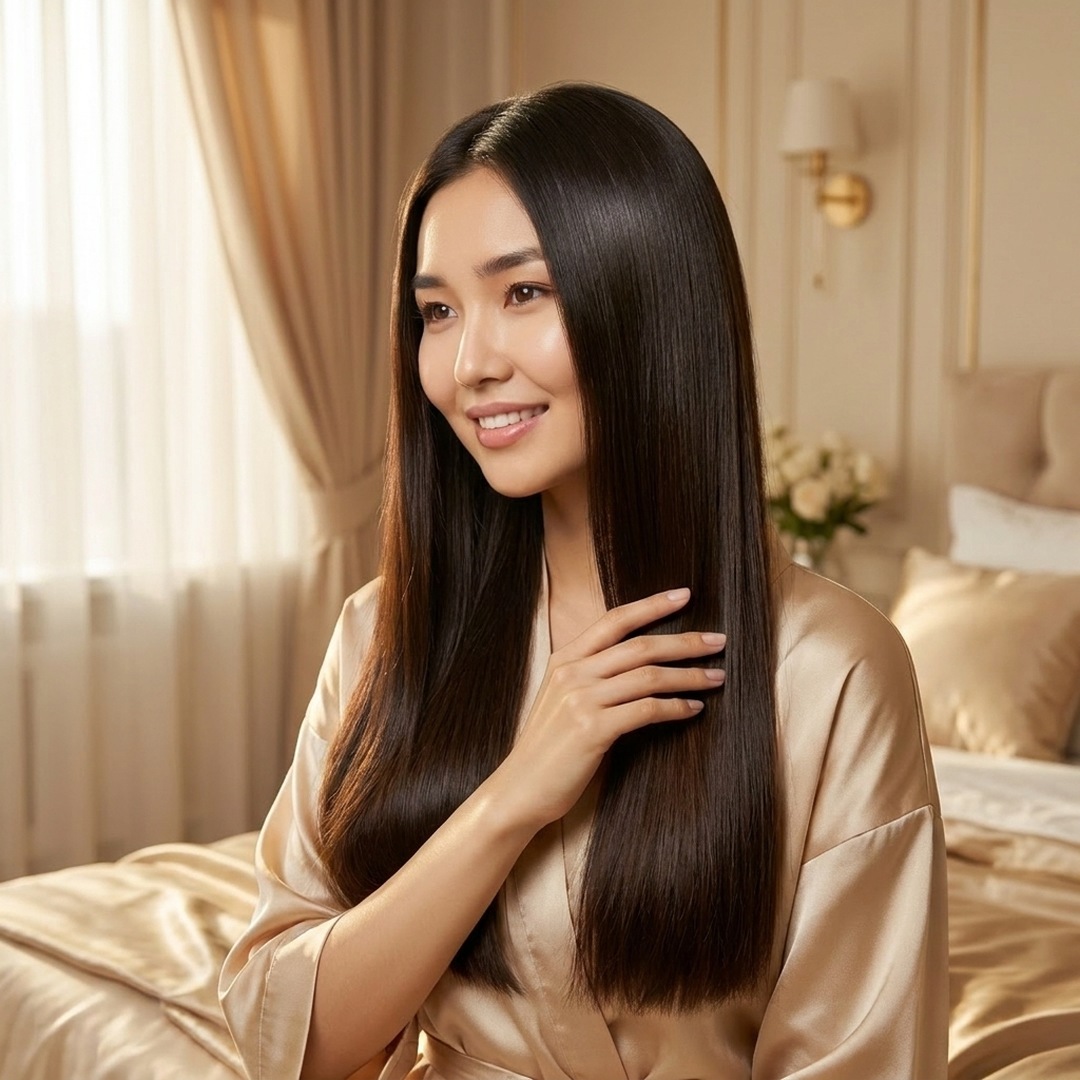
Dry oil is a multifunctional, fragranced 7-in-1 or 17-in-1 product. It sits between a serum and an oil: it seals the cuticle, adds shine, protects against heat styling, and leaves no greasy residue.
The formula typically contains lightweight volatile silicones + dry plant oils (almond, apricot) + a fragrance blend. After application, hair stays bouncy and holds its scent for hours.
This is a universal finishing option for anyone who doesn't want to navigate specialized serums. It's less targeted for any single concern, but far more convenient.
Choosing by goal
| Your concern | Category | Key actives |
|---|---|---|
| "I want shine" | Shine serum or dry oil | Silicones + argan oil, squalane |
| "My ends are frizzy" | Split-end serum | Keratin, ceramides |
| "My hair feels heavy from products" | Lightweight serum for fine hair | Panthenol, proteins |
| "Before flat-ironing" | Leave-in with heat protection | Amodimethicone, heat-protective molecules |
| "I want fragrance + everything in one" | 7-in-1 dry oil | Fragrance + oil blend |
| "Slow growth, shedding" | Growth activator (on the scalp!) | Caffeine, niacinamide, peptides |
How to use it correctly
Damp or dry hair?
- On damp hair — for even distribution and heat protection before drying.
- On dry hair — as a finishing touch after styling.
- Before flat-ironing — always apply to damp hair; otherwise the hot plate essentially burns off any residual water trapped on the strand.
Dosage
- Short hair: 1 drop.
- Medium hair: 1–2 drops.
- Long hair: 2–3 drops.
Overdoing it = greasy finish and hair that loses its freshness faster.
Where to apply
- Along the lengths and ends.
- Not at the roots, except for scalp serums — those work the opposite way and are applied only to the roots and scalp.
Cosmex serums
- Cosmex Hair Serum SHINE & SMOOTH — for shine and smoothness. Silicones + argan oil. A finishing product after styling.
- Cosmex Hair Serum REPAIR ENDS — for split ends. Hydrolyzed Keratin + ceramides.
- Cosmex Hair Serum LIGHT — for fine hair. Lightweight texture, proteins + Panthenol.
- Cosmex Satin Touch 7 in 1 — a fragranced dry oil. Shine + heat protection + scent + 4 more benefits in one bottle.
- Cosmex Cream-Spray Leave-in 17 in 1 — a leave-in cream serum, closer to a cream-spray formula. More details in our dedicated 17-in-1 cream-spray breakdown.
- Cosmex Hair Strengthening Serum — for the scalp, not the lengths. Contains caffeine and peptides. More details in our peptides for hair growth article.
Common myths
- "A serum repairs hair." No — just like any cosmetic product. It seals the cuticle, protects the surface, and masks damage. Structural repair comes from hydrolyzed Keratin in a mask — and even that is only partial.
- "A serum replaces conditioner." It doesn't. Conditioner closes the cuticle after washing; a serum is the finishing step for a styled result.
- "More serum means better results." The opposite is true. Too much = greasiness and a dull, heavy look.
- "Serum is only for dry hair." It depends on the goal. For heat protection — apply to damp hair. For shine — to dry hair. For split ends — either works.
In short: a serum is a finishing treatment designed for a specific goal. Choose based on your concern, apply to the lengths, and keep the dosage modest — your hair will thank you with shine and smoothness.