A hair loss shampoo doesn't treat the underlying cause of shedding, but it helps preserve what's growing: it cleanses the scalp gently without stripping moisture and strengthens the hair shaft along its length to prevent breakage. Look for a sulfate-free base and scalp-active ingredients — caffeine, niacinamide, Panthenol, and plant extracts. You can expect noticeable improvements in density after 8–12 weeks, and if shedding is severe, see a trichologist first.
Noticed an alarming amount of hair on your brush, pillow, and shower drain? Your first thought might be "I'm going bald." Take a breath — it's usually not that dire. Let's have an honest look at when shedding is normal, when it's a red flag, how to choose a shampoo, and what to realistically expect from it.
How Much Shedding Is Normal
80–100 hairs a day is perfectly normal. Each hair follows a cycle: it grows for several years, then "rests" for roughly three months before falling out to make way for a new one. About one-tenth of your hair is always in the resting phase — those are the strands you see on your brush. Shedding itself is a healthy process, not a catastrophe.
It's time to pay attention if thinning becomes visible: your part looks wider, your scalp shows through, your temples have thinned out, or shedding has spiked and hasn't let up for more than two or three months.
Shedding or Breakage: A Simple Test
Some of those "lost" hairs have actually snapped off. These are two different problems with two different solutions. Pick a few strands from your brush and look at the end:
- A small white bulb at the tip — the hair fell out from the root. This is true shedding: focus on the scalp and look for the underlying cause.
- No bulb, the strand is shorter than the rest, the tip looks ragged — the hair broke along the shaft. This is breakage: gentle washing, conditioner and a mask applied to the lengths, and less heat styling will help.
Often both issues are present at the same time — in which case you need care for both the scalp and the lengths.
Why Hair Sheds More Than Usual
- Deficiencies — low iron, vitamin D, zinc, or protein. Common in women, especially after restrictive diets.
- Hormones — postpartum, thyroid disorders, stopping hormonal contraceptives.
- Stress and illness — intense stress or a fever can push a portion of hairs into the resting phase, and 2–3 months later they all shed at once. This is usually reversible.
- Seasonal shifts — a mild uptick in autumn and spring is normal.
- Harsh styling habits — tight hairstyles, aggressive shampoos, and frequent heat styling weaken and break the hair.
- Hereditary thinning — covered in detail in our guide on types of alopecia.
On Iron — No Panic, No Myths
Iron deficiency is often cited as the main cause of hair loss in women. The science is actually more nuanced: some studies have linked low ferritin to shedding, while others found no clear connection. The right approach is to check your ferritin levels and bring them up if they're low (which benefits your overall wellbeing), but not to treat iron as the sole answer. Tests and a doctor first — supplements second.
How to Choose a Hair Loss Shampoo: Reading the Label
A shampoo won't fix the root cause of hair loss — but the right formula does three important things: it cleanses the scalp gently without drying it out, supports scalp health, and strengthens the hair shaft so strands don't break before they reach their full length. Flip the bottle and check the INCI list for:
| What to look for | Why it matters for your scalp and hair |
|---|---|
| Mild surfactants, free of SLS/SLES | Cleanse without stripping or irritating the scalp |
| Caffeine | Shown to stimulate follicles in lab studies; in-vitro results don't always translate directly, but it's a reasonable active for weakened hair |
| Niacinamide, Panthenol | Support and soothe the scalp |
| Centella Asiatica Extract | Calms irritated, reactive scalps |
| Hydrolyzed Wheat Protein | Strengthens the hair shaft and reduces breakage along the lengths |
| Plant oils and extracts | For example, rosemary: one six-month study found it performed on par with a pharmacy treatment |
We take a closer look at why a gentle base matters in our article on sulfates.
What to avoid: harsh sulfates if your scalp is sensitive, heavy oils and conditioners applied to the roots, and any product promising to "stop hair loss in two weeks" — that's not how hair biology works.
What's beyond cosmetics: minoxidil is a drug, prescribed by a doctor. Ketoconazole is an antifungal ingredient found in medicated shampoos, used for seborrheic dermatitis and dandruff. If your shedding is linked to either of these conditions, start with a doctor — and let your cosmetic routine play a supporting role.
The Trichology Line by Cosmex
For weakened hair that's prone to shedding, we developed the Trichology line — formulated and manufactured in Almaty, all products are sulfate-free:
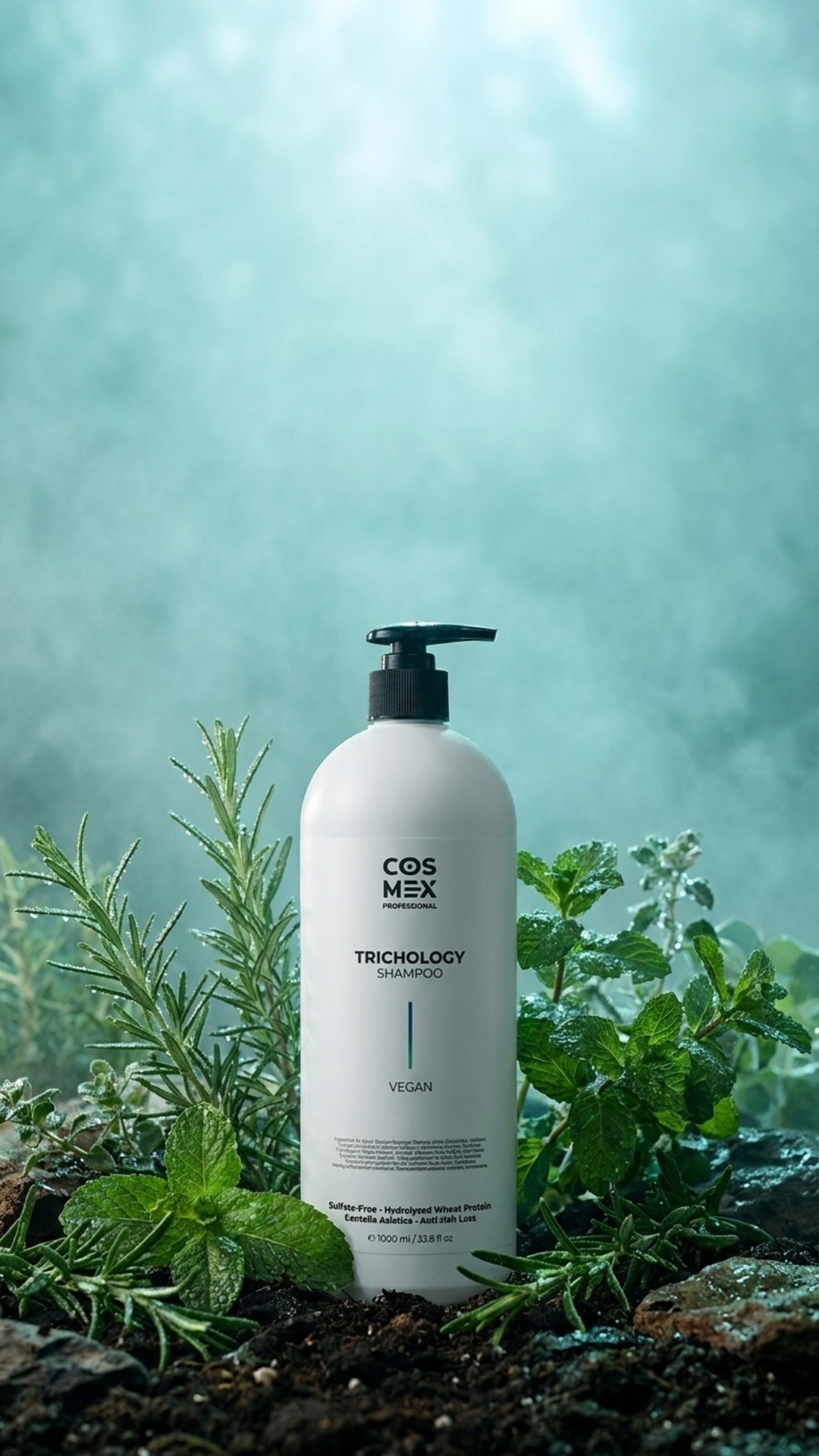
- Trichology Shampoo, 1000 ml — gently cleanses the scalp, strengthens hair with wheat protein, and supports the scalp with Centella Asiatica extract. Suitable for frequent washing.
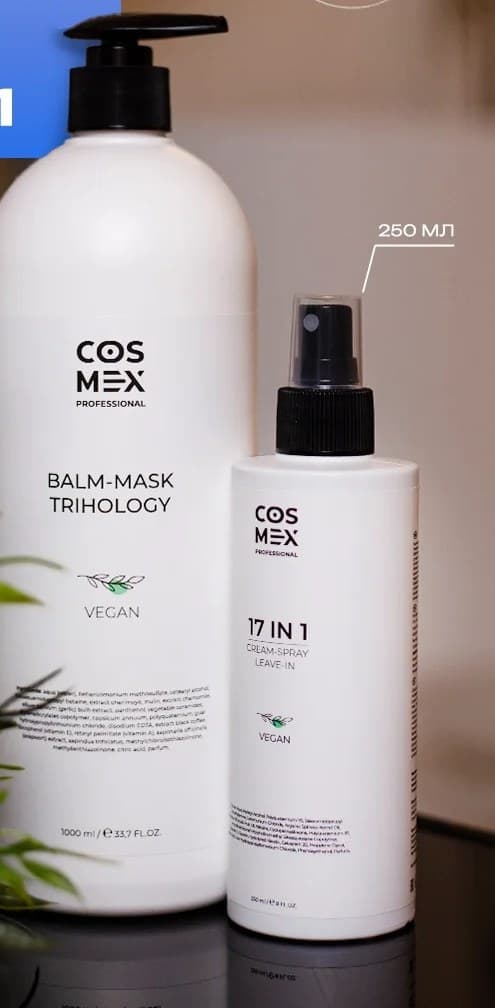
- Trichology Balm-Mask, 1000 ml — cystoseira brown algae extract and amino-silicone: smooths the cuticle and reduces breakage along the lengths. Use for 1–2 minutes as a conditioner or 5–10 minutes as a mask.
- Trichology Mask, 500 ml — with cystoseira extract, for a course of 1–2 times per week.
- Trichology Sets — shampoo and conditioner together; also available with a 17-in-1 spray and rosemary oil.
We won't promise to "stop hair loss 100%" — honesty matters more to us than bold claims. If shedding is significant, see a trichologist and get your bloodwork done first; use your hair care routine as support that creates the right conditions for recovery.
How to Get the Most Out of Your Routine
- Wash your hair when it needs it, using a gentle shampoo. Work it into the scalp and massage with your fingertips for 1–2 minutes — this both cleanses and stimulates circulation.
- Don't apply heavy conditioners to the roots — lengths only.
- Dry with a hairdryer on a medium heat setting, and don't pull wet hair into a tight ponytail.
- Address any deficiencies identified in your bloodwork — this often makes the biggest difference.
How Long Before You See Results
Hair grows roughly 1 cm per month, and hairs that "went to sleep" don't shed until several months after the triggering event. So:
- After 3–4 weeks, hair typically tangles and breaks less — that's the result of caring for the lengths;
- After 8–12 weeks of consistent care, you can start assessing density — compare photos of your part taken in the same lighting;
- if shedding hasn't decreased after three months, hair care alone won't be enough — it's time to see a doctor.
When a Shampoo Isn't Enough — See a Doctor
- round, bare patches have appeared, or your eyebrows and lashes have suddenly thinned;
- your scalp itches, turns red, flakes, or feels sore;
- shedding is heavy and hasn't eased up after more than three months;
- hair loss is accompanied by other symptoms: fatigue, weight fluctuations, irregular cycles.
If you'd like to understand what's happening with your hair at a deeper level, read our guides on types of alopecia and oils for hair growth. Full ingredient lists and prices for the entire line are in the Professional catalogue.