

«How often should you wash your hair?» — the internet gives wildly conflicting answers: some warn that daily washing «kills» your hair, others insist that washing too infrequently «lets dirt build up and damages your scalp». In reality, there is no universal number. The right frequency depends on your hair type, scalp condition, lifestyle — and, most importantly, what you're washing with. Let's break it down clearly: is daily washing harmful, what is the «rebound effect», how often you should wash based on your hair type, and how to wash in a way that keeps your hair feeling fresh for longer.
The short version, if you're pressed for time
- There is no universal frequency: the guiding principle is to wash when your hair is dirty, not on a fixed schedule.
- Frequent washing itself is not harmful — what causes damage is aggressive washing with a harsh sulfate shampoo.
- The «rebound effect»: the harsher and more drying the wash, the harder the scalp works to replenish sebum — and the faster hair becomes greasy.
- A rough guide: oily scalp / fine hair — every other day or daily with a gentle shampoo; normal hair — 2–3 times a week; dry and curly hair — 1–2 times a week.
- You don't need to «tough out» a dirty scalp for the sake of hair health — that's a myth. With a gentle, sulfate-free base, frequent washing is perfectly fine.
Now, let's go deeper.
First — what's actually happening on your scalp
To understand why «frequency» is such a nuanced question, it helps to know how the scalp works. Sebaceous glands produce sebum — a natural oily film that protects the scalp and hair from drying out. A little sebum is a good thing: it lubricates the length of the hair, adds softness, and helps retain moisture.
Problems arise when there's too much sebum, or when it combines with dust, product buildup, and sweat. That's when the roots start to feel grimy, the hair looks flat, and volume disappears. Washing is simply a way to remove excess sebum and impurities without compromising the scalp's protective barrier.
The first honest takeaway: the goal of washing is not to strip the scalp bone-dry, but to gently remove what doesn't belong there. If your scalp feels tight and «squeaky clean» after washing, that's not cleanliness — that's a damaged barrier. And that's exactly where most frequency-related problems begin.
Is washing your hair every day bad for it
Short answer: daily washing itself is not harmful — aggressive washing is. And that's a huge distinction.
Washing every day with a harsh sulfate shampoo constantly dries out the scalp: it strips away not just dirt but the protective lipid film as well. The barrier breaks down, the scalp reacts with irritation and tightness, and the sebaceous glands receive the signal — «not enough oil, produce more» — and ramp up sebum production.
With a gentle, sulfate-free shampoo, however, the picture is completely different. A mild formula cleanses without disrupting the protective layer, so even daily washing is well tolerated — no over-drying, no oiliness «swings». So the right question isn't «how long can I go without washing», but «what am I washing with». It's less about frequency and more about aggressiveness.
The rebound effect: why washing less can sometimes mean getting greasier
This is the key mechanism behind half of all complaints that «my hair gets greasy by the end of the day». Here's how it works:
- A harsh shampoo heavily strips the scalp of its oils.
- The scalp interprets this as over-drying and responds by producing more sebum to restore the film.
- A day or two later, the roots get greasy faster than before — and the urge to wash again with a harsh shampoo kicks in.
- The cycle locks in: the more frequently and aggressively you wash, the faster the grease returns.
This is the «rebound effect» — a vicious cycle of over-drying and compensatory oiliness. The paradox is that the way out isn't «force yourself to wash less» (that just delays the discomfort) — it's switching to a gentler formula. Once the scalp stops being stressed by aggressive cleansing, sebum production gradually normalises and hair stays fresh for longer. More on shampoo bases in our article on sulfate-free shampoo.
A guide by hair type
There's no universal number, but there are useful starting points. Treat these as a baseline, not a rule:
- Oily scalp / fine hair — wash as needed, often every other day or daily, but always with a gentle shampoo (Balance). There's no need to tough out a greasy scalp «for the sake of hair health» — excess sebum and buildup don't help the scalp; they get in the way.
- Normal hair — roughly 2–3 times a week. Go by how fresh your roots feel.
- Dry, damaged, or curly hair — less often, 1–2 times a week, with an emphasis on moisture (Hydration): this hair type and scalp dry out faster, and over-washing does more harm than good.
- After exercise, in hot weather, or with heavy product use — washing more often is completely fine. Sweat and styling products are forms of buildup that make sense to rinse away; just choose a gentle formula so the frequency doesn't stress the scalp.
The core principle stays the same and it's simple: wash your hair when it's dirty. Not by the calendar, but by how it feels — the sensation at the roots and how well the hair holds its shape. If your hair still feels fresh and has volume, there's no need to wash; if the roots have gone limp, it's time — even if it's «too soon by the schedule».
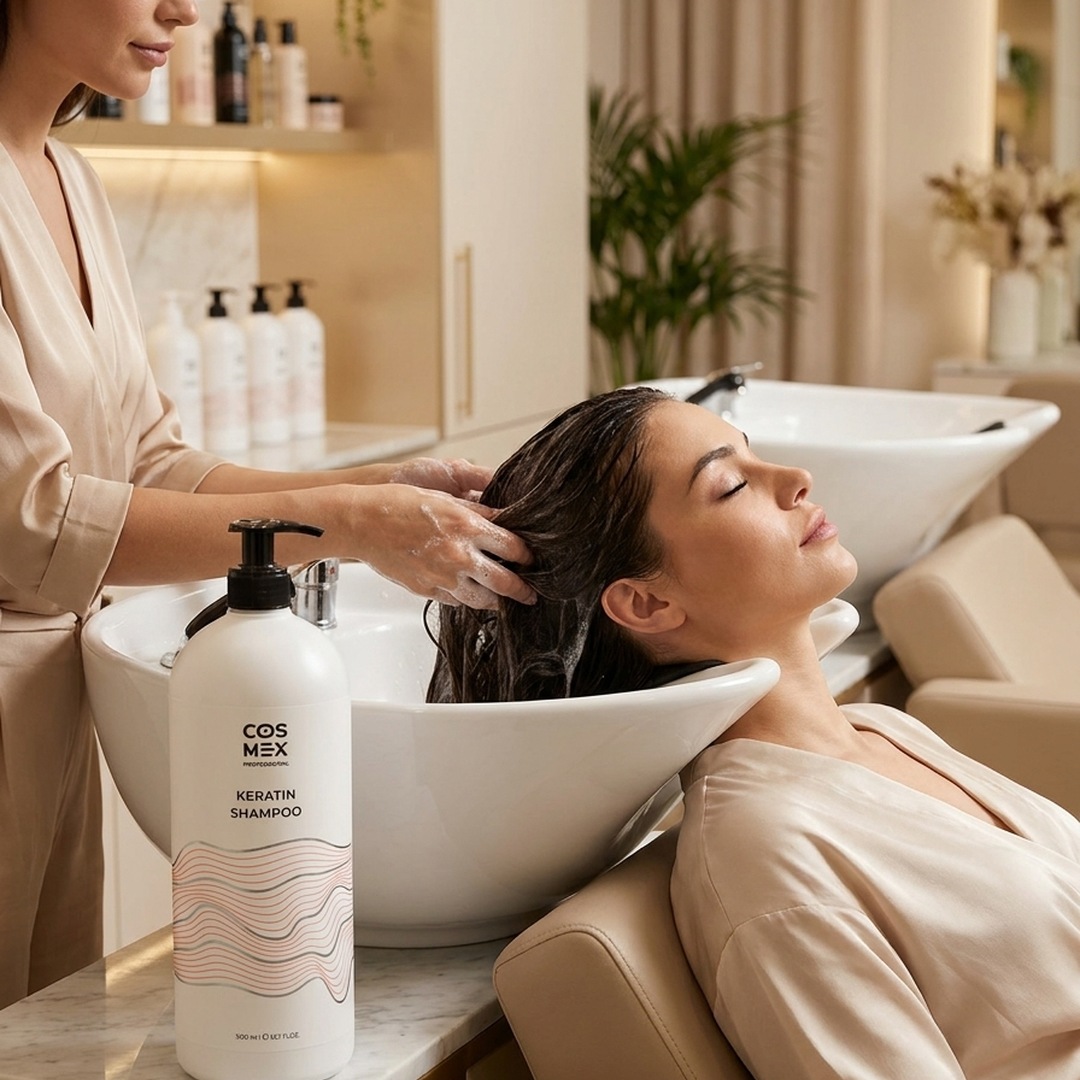
How to wash your hair correctly
Technique matters just as much as the shampoo itself. A few simple steps:
- Thoroughly wet your hair with warm (not hot) water. Hot water stimulates the sebaceous glands and dries out the scalp — warm water is more than enough to build a good lather.
- Apply shampoo to the scalp and roots, massaging with the pads of your fingers for 1–2 minutes. Finger pads, not nails. The lengths don't need separate scrubbing — the lather running down takes care of them.
- Double-cleanse if needed. The first wash removes the bulk of dirt and product buildup; the second cleanses gently and evenly. If your hair isn't very dirty, one round is enough.
- Apply conditioner and masks only to the lengths and ends — never the roots. At the roots, they weigh the hair down and speed up oiliness; the lengths, on the other hand, genuinely need them.
- Don't rub your hair with a towel — pat it dry. Wet hair is vulnerable, and rubbing lifts the cuticle and increases breakage. Use a heat protectant before blow-drying.
Common mistakes
- Water that's too hot. It dries out the scalp and encourages oiliness — a double setback. Warm water is more comfortable and safer.
- Conditioner and mask applied to the roots. They weigh hair down at the base and speed up buildup. These products belong on the lengths and ends.
- Forcing yourself to wash less when you have an oily scalp. Excess sebum and buildup don't «heal» the scalp — they interfere with it; there's no benefit to tolerating greasiness.
- A harsh shampoo used daily. This is the main driver of the rebound effect: the more aggressive the formula, the wider the swing between over-drying and oiliness.
- Rough towel-drying and a too-hot blow-dryer. Wet hair is easy to damage — harsh drying and hot air increase breakage and frizz.
Who suits which frequency — and where to be more careful
- Oily scalp. Frequent washing with a gentle shampoo is perfectly normal and comfortable. The risk isn't in the frequency — it's in pushing through the greasiness and using a harsh formula.
- Dry, sensitive scalp. Here it makes more sense to wash less often and always gently: over-cleansing makes tightness and flaking worse.
- Colour-treated and damaged hair. For these, the priority isn't frequency but gentleness: a mild formula combined with moisture helps preserve colour and condition for longer.
- Curly and high-porosity hair. These types are typically washed less often with an emphasis on hydration — they tend to lose moisture faster than they accumulate buildup.
A few honest caveats
Some things worth saying plainly, without sugarcoating:
- There is no «ideal» frequency that works for everyone. Any number you find in an article is a generalised guideline. Your personal norm comes from observing your own scalp — not from a chart.
- Switching formulas isn't an instant fix. After moving to a gentle, sulfate-free shampoo, the scalp needs time to regulate its sebum production. A few weeks of adjustment is completely normal.
- Shampoo can't fix internal causes. If your scalp is itchy, actively flaking, or you're experiencing noticeable hair loss, the answer isn't «find the right wash frequency» — it's getting to the root cause, which may involve the scalp itself, hormones, or nutritional deficiencies. In that case, see a trichologist; haircare can be a support, but not a substitute for treatment.
Cosmex: why washing frequently is nothing to fear
The main takeaway from this article: there's no reason to be afraid of frequent washing — what matters most is what you're washing with. A gentle, sulfate-free formula is precisely what makes regular (including daily) washing safe and comfortable: it cleanses without disrupting the scalp's protective barrier and without triggering the rebound effect.
The entire Cosmex Professional line is built on exactly this kind of formula — made in-house in Almaty. You can browse all Cosmex shampoos in one place. Here's what to reach for based on your needs:
- Balance — for oily scalps and fine hair that need frequent but gentle cleansing, without over-drying or oiliness swings.
- Hydration — for dry, damaged, and curly hair that benefits from less frequent washing and a focus on moisture.
And remember: the sulfate-free base across the entire line exists precisely so that regular washing doesn't become a source of stress for your scalp. For more on the formula itself, see our article on sulfate-free shampoo — and if your roots are getting greasy too quickly and you want to dig into that specifically, check out our piece on shampoo for oily hair.


