

You walk out of the salon loving your new color — and two weeks later it looks washed out, dull, and if you're a blonde, the brassiness has already crept in. Sound familiar? Color doesn't just "go bad" on its own: it fades, and almost everything we do after coloring either speeds that process up or slows it down. Let's break it down in plain terms — how color-treated hair actually works, what strips pigment fastest, and how to keep your color looking fresh for weeks longer. No magic, just straightforward, honest care.
Quick summary if you're short on time
- Color fades because coloring lifts the cuticle scales, and pigment gradually escapes with every wash.
- The number-one enemy of color is sulfates: harsh surfactants that strip not just dirt, but pigment and lipids too, leaving hair porous.
- The combination of gentle cleansing + moisture works best: cleanse carefully, then use hydration and nourishment to help the cuticle lie flat and "lock in" color.
- Color fades faster from hot water, sun exposure, and washing too often — these are the three silent thieves of freshness.
- Blondes have a separate issue: it's not really about the color fading, it's about fighting brassiness — that's where toning care with cool pigment comes in.
- This is a long game about building habits: one good shampoo won't save you — a consistent routine will.
Now, let's get into the details.
Why color fades in the first place
To understand what we can actually influence through our haircare routine, it helps to know where the color "goes." The outside of each hair strand is covered by the cuticle — overlapping scales that lie flat like roof tiles. Beneath them is the cortex, the main body of the hair, where pigment settles after coloring.
When your hair is colored, the formula lifts those scales so pigment can penetrate inside. The problem is that after coloring, the cuticle doesn't seal back perfectly — it stays slightly raised and more porous than uncolored hair. And where there are gaps, there's a way out: with every wash, especially with hot water and a harsh shampoo, tiny particles of pigment gradually escape. The honest conclusion: our goal isn't to "lock" color in permanently (that's not possible), but to slow its exit. That means washing gently, helping the cuticle lie flat, and avoiding anything that unnecessarily lifts it open.
Why sulfates are the enemy of color
If there's one thing to take away from this entire article, let it be this. Sulfates (SLS, SLES, and their relatives) are aggressive cleansing agents that produce a rich lather and strip away virtually everything — including what we want to keep.
First, harsh surfactants wash out the pigment itself: color becomes noticeably duller and fades faster. Second, they strip away the natural lipids — the fatty film that helps cuticle scales lie flat. Without it, the cuticle stands up, hair becomes even more porous, and porous hair releases color more easily. It becomes a vicious cycle: harsh shampoo strips color → hair becomes more porous → color fades even faster.
That's why the first and most powerful move for color-treated hair is switching from a sulfate base to a gentle, sulfate-free cleanser. For a deeper look at why this works and how mild surfactants differ from harsh ones, check out our articles on sulfates in shampoo and sulfate-free shampoo.
The role of gentle cleansing and moisture
The key here is not to go to the extreme of "just don't wash it." Dirty scalp and hair that's been through a full day absolutely need to be washed — the question is what you wash with. Mild cleansing bases work more gently: they remove buildup and excess sebum without scraping out pigment and lipids along the way. Color visibly lasts longer with them.
The second half of the equation is hydration and nourishment. Color-treated hair is almost always drier and more porous than untreated hair, and that dryness works against color: porous, "open" hair looks duller and releases pigment faster. When we restore moisture and lipids to the hair, the cuticle scales lie closer together, the surface becomes smoother — it reflects light better (that's where the shine of fresh color comes from) and releases pigment less readily. The formula is simple: cleanse gently, then replenish moisture and nourishment. One without the other delivers weaker results.
What accelerates fading: hot water, sun, and washing too often
Even with the perfect shampoo, everyday habits can drain your color fast. Here are the biggest culprits that rarely get enough attention:
- Hot water. The hotter the water, the more the cuticle opens up — and the easier it is for pigment to escape. Wash with warm water, and finish with a cool rinse: it helps the cuticle lie flat and literally "seals in" color and shine.
- Washing too frequently. Every wash means a small loss of pigment. Washing every other day instead of daily makes a noticeable difference in how long color lasts. A gentle shampoo and dry shampoo between washes can help stretch that interval.
- Sun and UV exposure. Ultraviolet light breaks down pigment — both artificial and natural — so color fades faster in summer and on vacation. A hat and hair products with UV protection genuinely extend the life of your color, especially for bright and copper shades, which are the first to go.
- Chlorine and saltwater. Swimming pools and the ocean dry out hair and strip color (chlorine can even give blonde hair a greenish tint). Before getting in the water, wet your hair with clean water and apply a little leave-in conditioner — this reduces how much of the harsh water your hair absorbs.
- Heat styling. High temperatures dry out hair and make it more porous. You don't have to give up styling altogether — just use heat protection and avoid cranking the temperature to the maximum.
Blonde hair: it's not about the color fading — it's about brassiness
Blondes have their own specific challenge. Cool blonde, ash, platinum — the issue isn't really "color washing out" so much as it is the hair turning brassy. Lightened hair naturally has a warm, yellowish undertone, and over time — accelerated by hard water, sun exposure, and heat styling — that warm tone pushes through, making blonde look cheap and dull.
Re-coloring every two weeks isn't the answer. What works instead is a different principle — neutralizing color with its opposite: on the color wheel, violet is directly opposite yellow, so care products with cool violet pigment cancel out brassiness and restore a clean, cool tone to blonde hair. That's exactly what those "purple" shampoos and masks do. The key is not to leave them on too long — otherwise light hair can take on a slightly lavender cast. How it all works and how to use it without overdoing it is covered in detail in our article on toning shampoo for blonde hair.
Color-treated hair care: step by step
- Wait after coloring. Try not to wash your hair for the first 48 hours: the color needs time to set, and washing too soon takes some of the pigment with it.
- Switch to a sulfate-free base. This is the most important step. A gentle shampoo formulated for color-treated hair slows fading more than anything else.
- Wash less often, with warm water. Every other day instead of every day, no scalding water. Finish with a cool rinse.
- Always restore moisture. After shampooing, use a conditioner or mask for color-treated hair: they smooth the cuticle and help color hold.
- Blondes: use cool pigment on a schedule. Violet care 1–2 times per week, no longer than the time indicated on the packaging. Not every wash — otherwise you'll end up with a blue tint.
- Protect from heat and sun. Heat protectant before styling, a hat in the sun, a clean-water rinse before the pool or ocean.
- Leave-in care on mid-lengths and ends. A drop of oil or lightweight cream adds shine and masks porosity — color looks fresher for longer.
Common mistakes
- Using a regular sulfate shampoo on color-treated hair. The most frequent one: color fades in a couple of weeks, and it feels like the dye is to blame — but it's the shampoo base.
- Very hot showers. Feels great, but it opens up the cuticle and lets pigment escape faster. Warm water is enough.
- Washing hair every day. Every wash means a little less color. Less frequent = longer-lasting freshness.
- Skipping moisture. Cleansing without nourishing. Dry, porous hair looks dull and holds color poorly.
- Blondes: leaving violet shampoo on longer "just to be safe." Too long and you get a cool, ashy tint. Better to use it more often for shorter periods than to leave it on too long occasionally.
- Forgetting about sun exposure. Color fades on vacation and then the colorist gets the blame. UV protection and a hat genuinely make a difference.
A word of honesty
Let's be straight: no haircare product makes color permanent. Coloring is always a compromise, and pigment will fade regardless — we're only slowing it down. How much depends on the starting condition of your hair, the type of dye used, the hardness of your water (in Almaty and most cities it's quite hard), and how much lightening was involved. Bold fashion shades — copper, red, pastels, direct dyes — almost always fade faster than natural tones. That's a characteristic of the pigments themselves, not a sign of "bad haircare."
One more thing: maintaining your lengths doesn't replace a visit to your stylist. If hair has become brittle and straw-like after lightening, no shampoo will "heal" the structure — the damaged sections will need to be cut away over time, and your haircare routine will help you get there in decent shape. We say this directly so you don't expect the impossible from a bottle.
The Cosmex line for color-treated hair
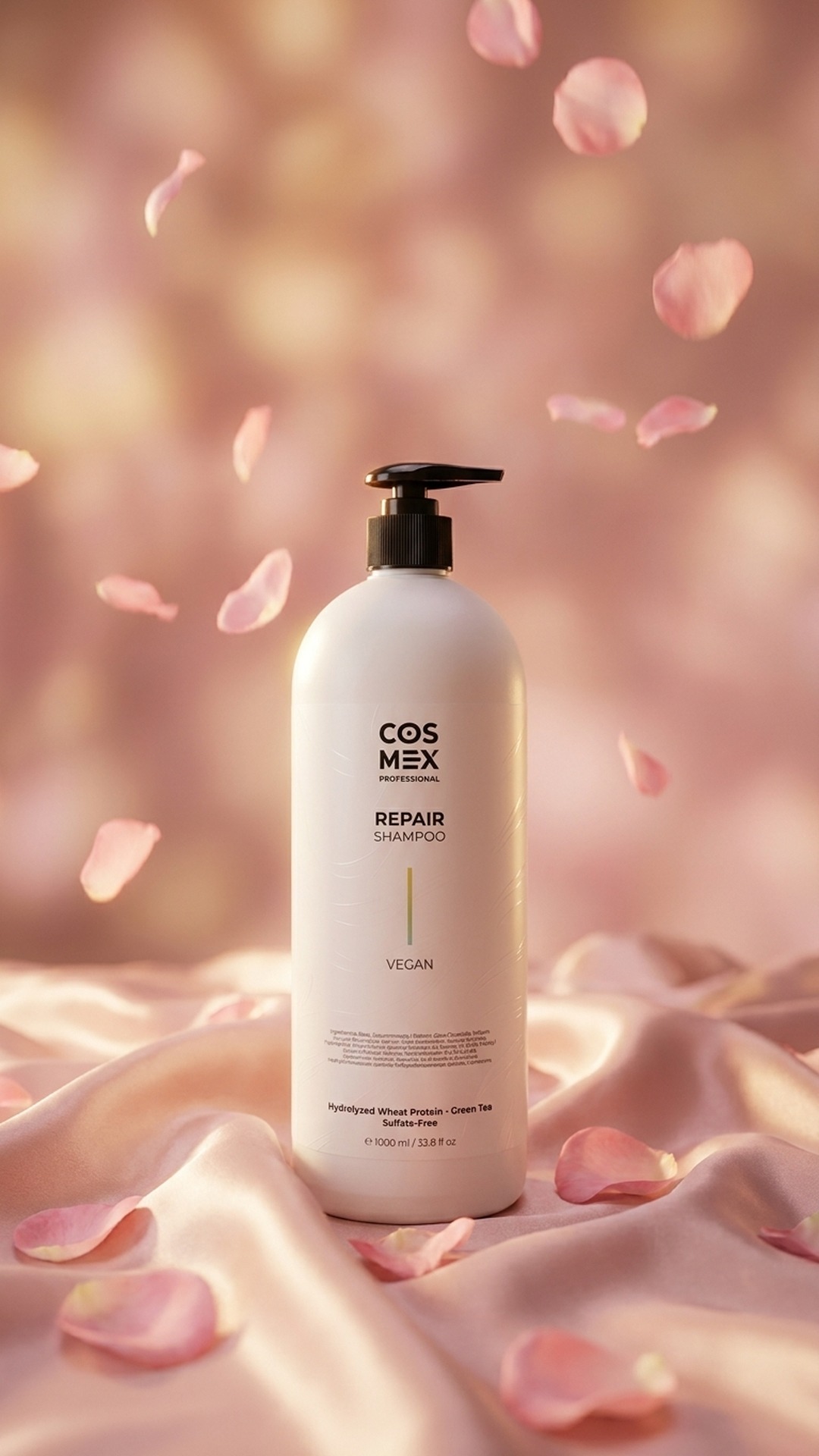
Our entire lineup is built on a sulfate-free base — which, as we've covered, is exactly what color-treated hair needs most: gentle cleansing preserves pigment and lipids, so color fades more slowly. This isn't a "special feature for colored hair" — it's the foundational principle behind everything we make. Produced in-house in Almaty.
Here's how to build a complete routine:
- Hydration and nourishment — the Hydration line: restores moisture to porous color-treated hair, smooths the cuticle, adds shine, and helps color hold.
- Smoothness and density — Keratin care: seals the cuticle scales, evens out the surface — less porosity means longer-lasting color freshness.
- For blondes — against brassiness — Anti-Yellow cool pigment: neutralizes yellow undertones and restores a clean, cool tone without a trip to the salon.
Full range and pricing are in the Professional catalog. And to help your color last longer, keep three simple things in mind: wash gently (more on the base in our articles on sulfates and sulfate-free shampoo), keep hair moisturized, and avoid excess heat. Blondes, add cool-pigment toning following the guide in our brassiness article — and your color will thank you.


