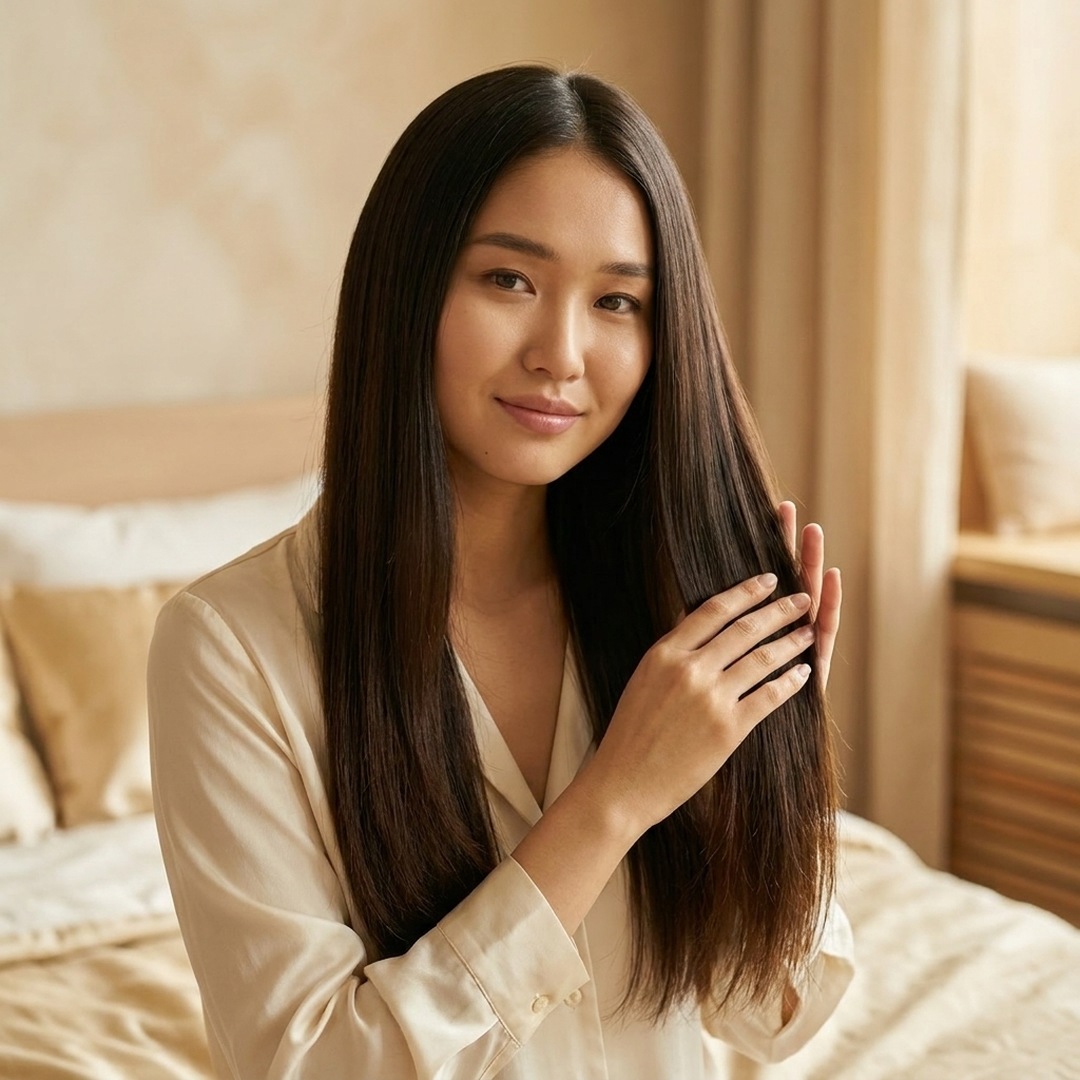
Тёмные волосы выглядят эффектно, когда они глянцевые и насыщенные — и тускло, когда теряют глубину цвета и блеск. У ухода за тёмными есть своя специфика: им не нужен фиолетовый пигмент (это для блонда), зато важны блеск, защита от вымывания тёплых красных оттенков и зеркальная гладкость. Разберём по-честному, что реально нужно тёмным волосам и чем «чёрный шампунь» отличается от обычного.
Коротко, если нет времени читать
- Тёмным волосам главное — блеск и глубина цвета, а не осветление. Фиолетовые шампуни (для блонда) им не нужны и могут давать сероватый налёт.
- «Чёрный шампунь» — это либо подкрашивающий (с тёмным пигментом, освежает цвет), либо просто шампунь для тёмных волос с акцентом на блеск. Это разные вещи.
- У тёмных волос сильнее заметны тусклость, перхоть и секущиеся кончики — контраст с тёмным фоном. Поэтому блеск и гладкость особенно важны.
- Окрашенным тёмным важна защита от вымывания тёплых пигментов (красных, шоколадных), которые уходят первыми.
Что нужно тёмным волосам
Блеск и глубина цвета
Тёмный волос красив за счёт того, как он отражает свет — глянцевая поверхность даёт «дорогой» эффект, тусклая выглядит безжизненно. За блеск отвечает гладко лежащая кутикула. Помогают:
- Бессульфатная основа — не вымывает и не пушит, кутикула остаётся гладкой.
- Кислотный pH — закрывает чешуйки, усиливает отражение света.
- Масла и силиконы-заменители — запечатывают поверхность (например, сквалан, аргановое масло). Подробно — в статье про сквалан и про аргановое масло.
Что НЕ нужно
- Фиолетовый/синий пигмент — это для нейтрализации желтизны на блонде. На тёмных волосах он не нужен и может давать холодный сероватый налёт. Если видите «оттеночный для тёмных» — смотрите, чтобы это был тёплый/нейтральный пигмент, а не фиолетовый.
«Чёрный шампунь» — что это
Под этим запросом ищут две разные вещи:
- Подкрашивающий шампунь с тёмным пигментом — освежает цвет тёмных и окрашенных в тёмное волос, маскирует чуть отросшее или вымытое. Работает поверхностно, смывается постепенно. Это не краска — это тонирование между окрашиваниями.
- Шампунь для тёмных волос с акцентом на блеск — без пигмента, но с компонентами для гладкости и насыщенности цвета. Подходит и натуральным тёмным, и окрашенным.
Выбор зависит от задачи: освежить цвет — первый, поддержать блеск натуральных тёмных — второй.
Уход за окрашенными тёмными
У окрашенных в тёмное своя боль: тёплые пигменты (красные, медные, шоколадные) вымываются первыми, и цвет уходит в холод или тусклость. Что помогает:
- Бессульфатный шампунь — сульфаты вымывают пигмент в разы быстрее.
- Прохладная вода при мытье — горячая раскрывает кутикулу и вымывает цвет.
- Защита цвета — средства, которые запечатывают пигмент в волосе. Об уходе за окрашенными подробно — в отдельной статье.
Чего ждать не стоит
- Шампунь не перекрасит волосы. Подкрашивающий освежает оттенок, но не изменит цвет кардинально — это задача краски.
- Блеск не появится на повреждённых волосах от одного мытья. Сначала нужно восстановить гладкость кутикулы — это накопительный уход.
- Подкрашивающий пигмент может временно оставаться на руках/полотенце — это норма для тонирующих средств.
В каких средствах Cosmex это есть
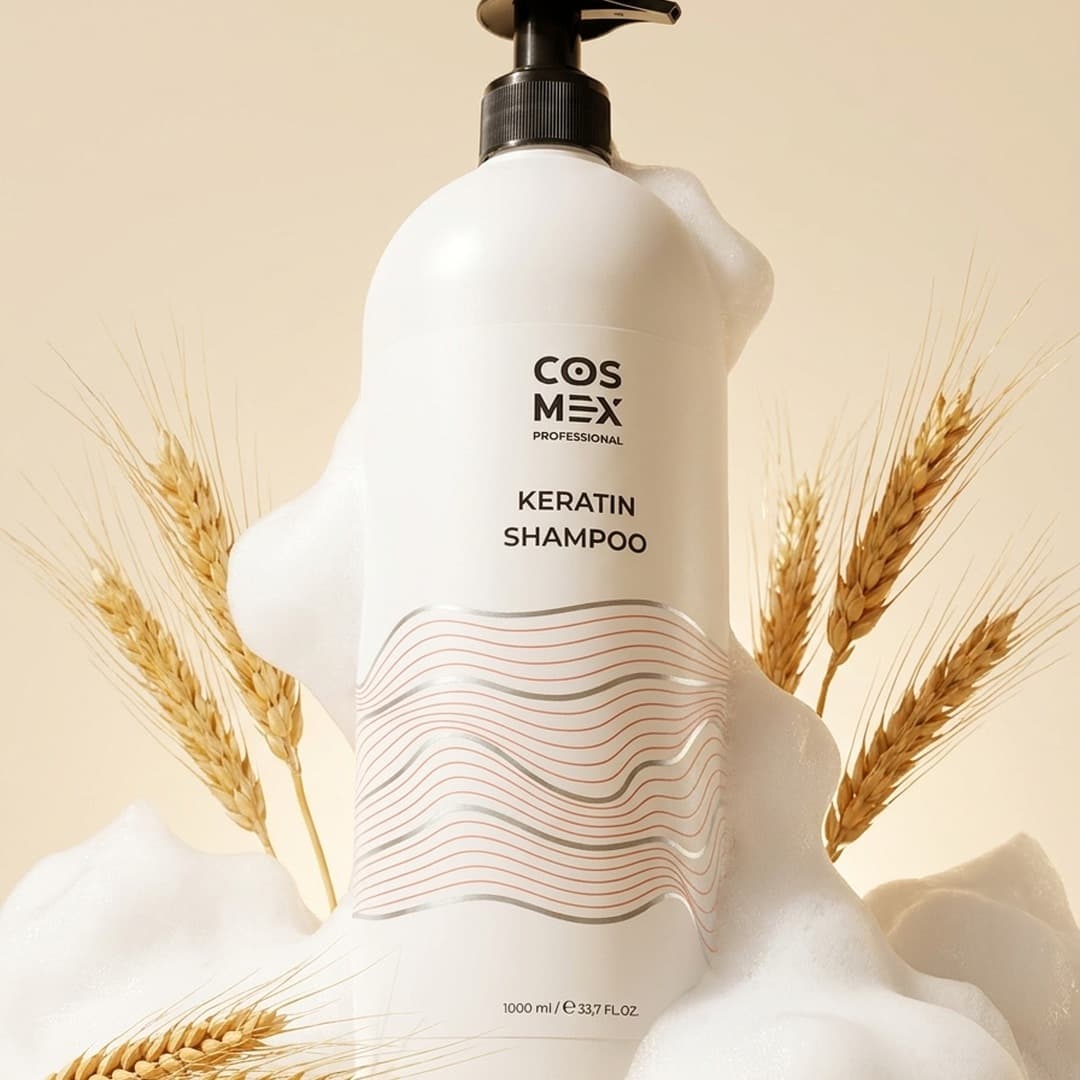
- Black Edition — шампунь для тёмных волос — бессульфатный, с акцентом на глянцевый эффект и глубину цвета.
- Black Edition Hair Balm — бальзам для тёмных, глянцевый финиш.
- Color Expert — для окрашенных волос, защита цвета от вымывания.
- Hair Serum Shine & Smooth — сыворотка для блеска и гладкости длины.
Если коротко: тёмным волосам нужен не фиолетовый пигмент, а блеск, гладкость и защита тёплых оттенков. Бессульфатная основа + запечатывание кутикулы дают тот самый глянцевый, «дорогой» тёмный цвет. Про блеск длины подробнее — в статье про сухие волосы.