White flakes on your favourite sweater — familiar and frustrating. Dandruff feels embarrassing, as though it means you haven't washed properly. In reality, it's the most common scalp condition out there; almost everyone deals with it at some point, and it responds very well to the right care routine. Let's look at where dandruff comes from and how to bring it under control without drying your scalp out.
Where Dandruff Actually Comes From
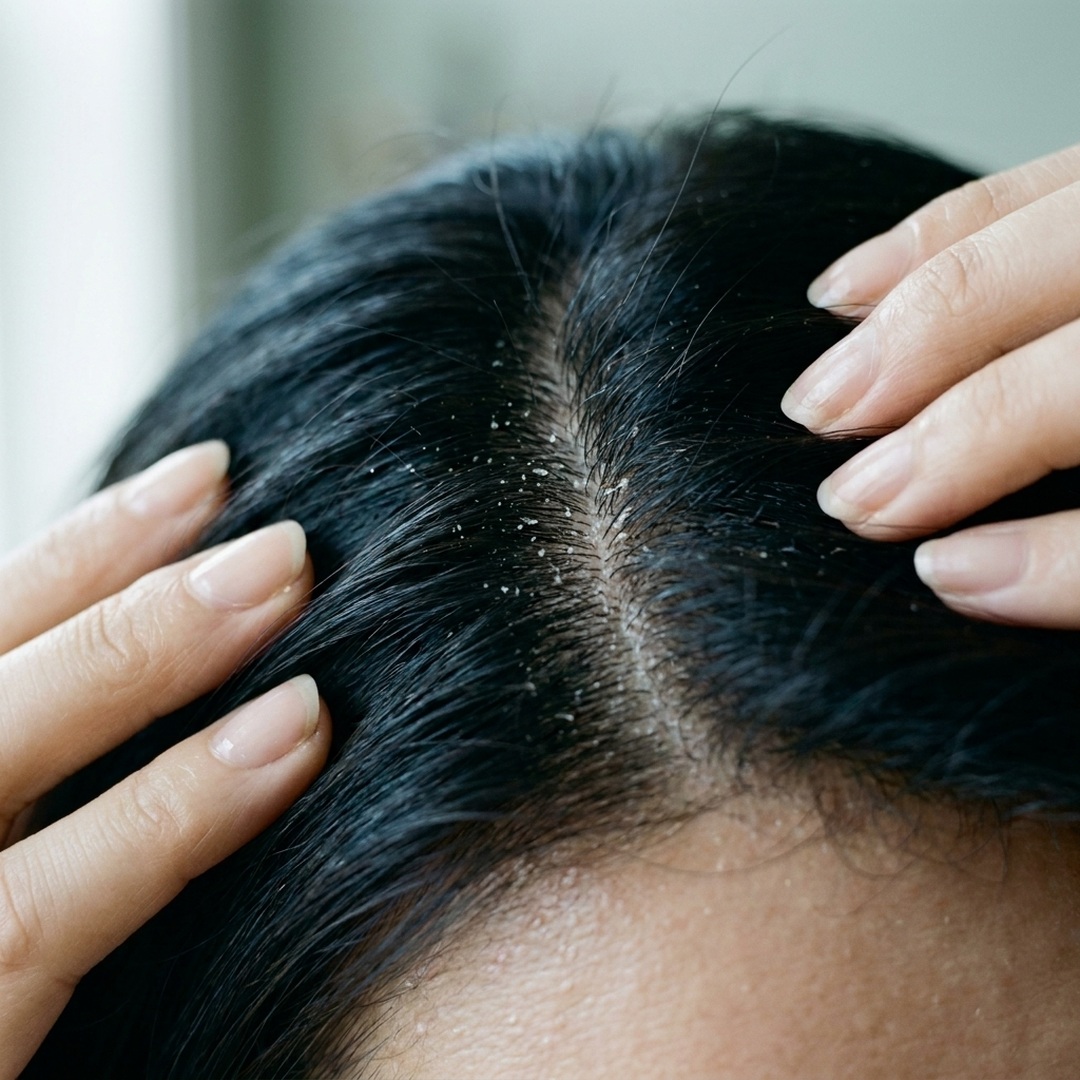
Contrary to popular belief, dandruff isn't dirt. Every scalp is home to a naturally occurring yeast called Malassezia. Under normal conditions it causes no trouble at all. However, it feeds on sebum and releases by-products that irritate the skin in people who are sensitive to them. The skin responds by speeding up its cell turnover — those cells clump together and shed as visible flakes. That's dandruff.
It comes down to a three-part equation: fungus + sebum + individual skin sensitivity. That's why some people have dandruff and others, with exactly the same yeast, don't.
This also explains the two main types:
- oily dandruff — large, yellowish flakes; hair becomes greasy quickly;
- dry dandruff — small white flakes; scalp feels tight and itchy.
The Most Common Mistake — Going Scorched-Earth on Dandruff
The most frequent error is reaching for the harshest shampoo available and washing your hair as often as possible to scrub the flakes away. It backfires: aggressive sulfates strip the scalp, break down its natural defences, and in response the skin produces even more oil — making the flaking worse. It's a vicious cycle.
The right approach is actually the opposite: gentle but consistent cleansing, combined with ingredients that keep the yeast in check and calm the scalp. Less aggressive, not more.
What Actually Works
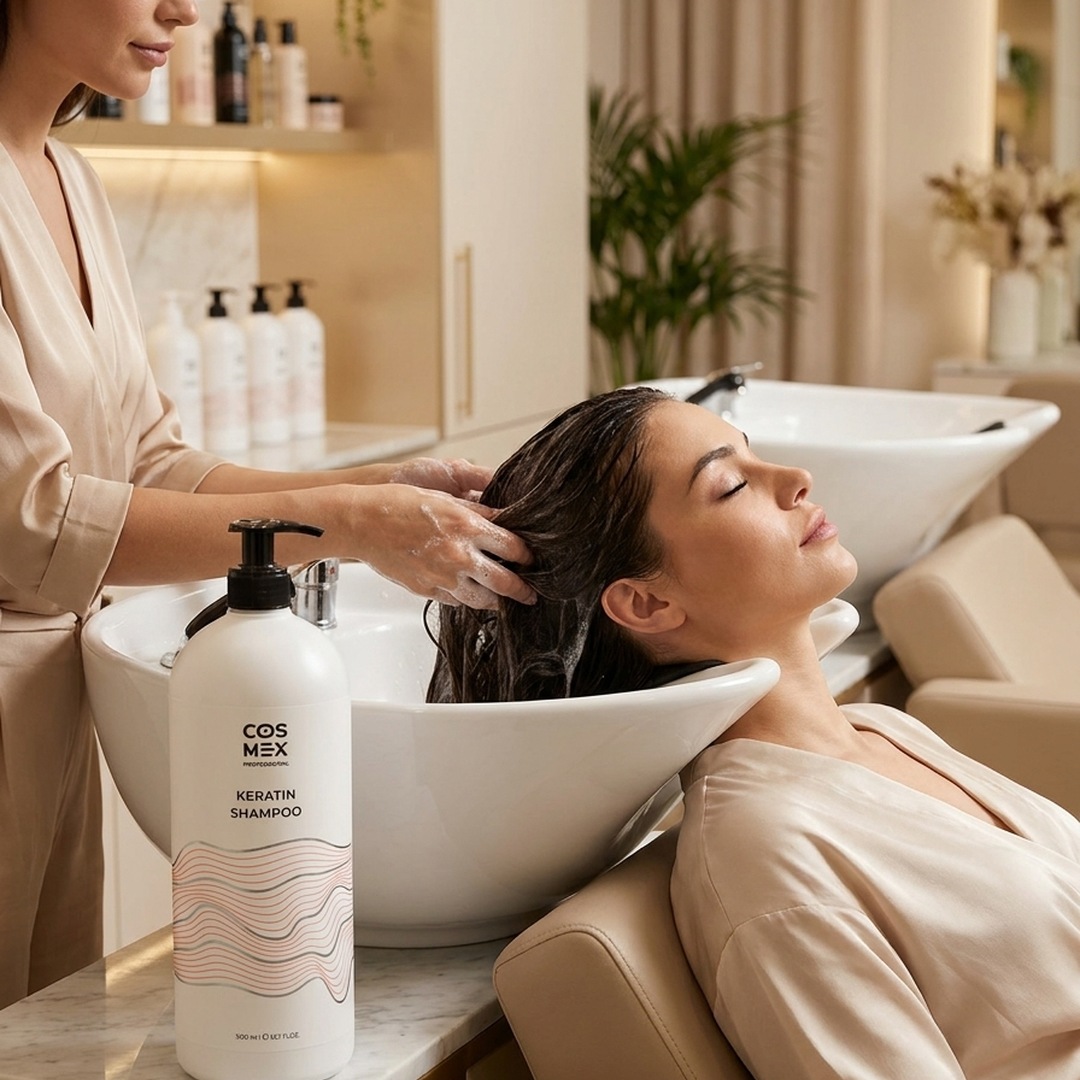
Medicated, pharmacy-grade anti-dandruff shampoos rely on antifungal actives — such as ketoconazole and zinc pyrithione — to reduce fungal levels. Everyday care products have a gentler goal: keeping the scalp balanced without over-drying it. The key ingredients here are:
- mild cleansing agents instead of harsh sulfates;
- sebum-regulating and soothing actives — they reduce the environment the fungus thrives in and relieve itching;
- Panthenol and niacinamide — calm irritated skin.
It's worth distinguishing between everyday dandruff and true seborrheic dermatitis: if the flaking is persistent, accompanied by intense itching and redness, and simply won't go away, that's a dermatologist's territory — cosmetics cannot replace medical treatment.
The Cosmex Anti-Dandruff Line
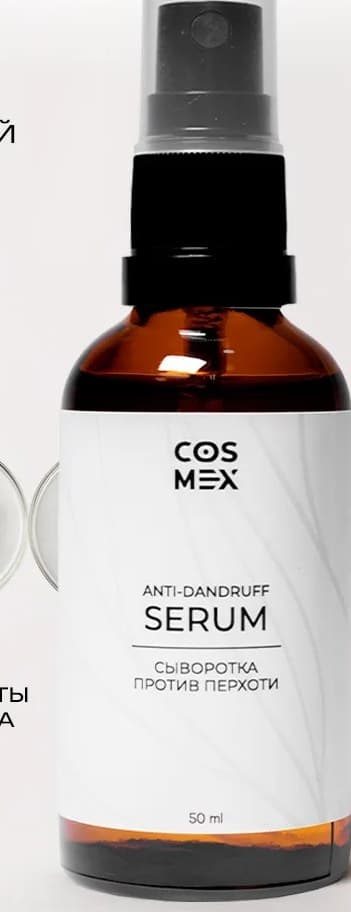
For managing everyday dandruff, we created the Anti-Dandruff line — a sulfate-free shampoo made in-house in Almaty. It's built on a mild base to avoid pushing the scalp into an over-dried state, and it works together with actives that target flaking and itching. We'll be upfront: this is cosmetic scalp care, not a medical treatment. If your dandruff is stubborn, see a doctor first.
You can find the full ingredient list and pricing in the anti-dandruff product selection.
A Routine That Works
- Wash your hair with a gentle shampoo regularly — every 2–3 days. Don't try to tough it out with an unwashed scalp in the name of "scalp health".
- Lather twice: the first wash removes buildup, the second (leave it on for 2–3 minutes) gives the actives time to do their job.
- Conditioner goes on the lengths only — keep it off the scalp.
- Avoid very hot water and frequent heat styling — both irritate the scalp.
- Give it 3–4 weeks of consistent use before judging the results.
If dandruff comes paired with hair loss, take a look at the Trichology line. And if you'd like to understand why a mild base matters so much here, check out our article on sulfate-free shampoo.