Monarda is a plant with a long history: Native Americans brewed its leaves as tea and a folk remedy, and during World War I, when European thyme became scarce, spotted monarda (Monarda punctata) was cultivated across the United States as a source of thymol. In haircare and skincare, monarda appears far less often than rosemary or lavender — which is a shame, because its oil is among the most thymol- and carvacrol-rich of any plant oil. Properly diluted, it makes an excellent treatment for the scalp and nails. Here's an honest look at what it actually does for the scalp, nails, and skin, where its benefits end, who it suits, and how to use it without causing irritation.
The Short Version
- Monarda oil is a concentrate rich in thymol and carvacrol — the same aromatic compounds found in thyme and oregano.
- For the scalp — care for dandruff, oiliness, and post-color itching.
- For nails — cuticle and nail fold care: softer skin, neater-looking nails.
- This is a potent oil — dilution is non-negotiable (1–2% in a carrier), never apply it neat.
- Monarda is a cosmetic, not a medicine: if you suspect a fungal infection, bacterial infection, or seborrheic dermatitis, see a dermatologist first.
What Monarda Is and Why It Works
Monarda (Monarda fistulosa, Monarda didyma, Monarda citriodora) is a genus of herbaceous plants in the mint family. The essential oil is obtained by steam distillation of the flowering tops. A CO₂ extract (carbon dioxide under pressure, without heat) is also available — it contains the same aromatic compounds at equally high concentrations. Composition varies significantly by species and chemotype, but the key molecules are generally the same:
- Thymol (30–60% in Monarda fistulosa) — the primary aromatic component, the same molecule found in thyme. It's also added to toothpastes and mouthwashes.
- Carvacrol — a close relative of thymol, abundant in oregano oil. It sharpens the scent and, together with thymol, is responsible for the burning sensation undiluted oil causes on skin.
- Geraniol and Linalool — the soft floral note in the fragrance; both are potential allergens, which is why a sensitivity patch test is essential (more on that below).
Rosmarinic acid, which is often attributed to monarda, is barely present in the essential oil — this antioxidant stays in the leaves and water-based infusions.
In gardens, monarda is known as bee balm, and its aromatic leaves are still brewed as herbal tea.
What Monarda Does for the Scalp and Hair
For Dandruff
Dandruff is, in most cases, the scalp's reaction to the yeast-like fungi Malassezia globosa and M. restricta. These organisms naturally inhabit everyone's scalp, but under certain conditions — excess sebum, stress, unsuitable hair products — they become overactive, and the scalp responds with flaking and itching.
Diluted monarda oil is a scalp treatment for dandruff-prone skin: it refreshes the scalp and, with regular use, helps reduce flaking and itching. It is not a medicine and not a substitute for an anti-dandruff shampoo — think of it as a complement. If dandruff persists after several weeks of consistent use, or if the scalp becomes red, weepy, or develops yellow crusts, see a dermatologist.
For Post-Color Itching
After coloring — especially aggressive services like bleaching or highlights — the scalp often feels dry, tight, and itchy. A carrier oil blend with monarda, massaged into the scalp 24–48 hours after coloring, softens the skin and relieves that tight, itchy feeling. That's a better response than scratching or immediately washing your hair with yet another shampoo.
This is only appropriate when the scalp has no open sores, scabs, or redness. Swelling, weeping, intense itching, or burning after coloring may indicate an allergic reaction to the dye — in that case, oil won't help, and you need a doctor.
For an Oily Scalp
An oil blend with monarda won't dry out the scalp — though many people expect that from spicy essential oils. For oily scalps, it refreshes and, with regular use, helps reduce greasy flakes and itching.
One important caveat: "oily dandruff" with yellow scales, redness, and crusting along the hairline is often seborrheic dermatitis — a condition for a dermatologist, not a bottle of oil.
What Monarda Does for Nails
For nails, monarda is all about cuticle and nail fold care: diluted in a carrier oil, it softens the surrounding skin, keeping the cuticle from drying out and cracking, and leaving nails looking well-groomed.
In cases of onycholysis (nail plate separating from the nail bed), monarda is not a treatment — it's a way to care for the skin around the nail while the plate grows out. The underlying cause of separation (trauma, chemicals, fungal infection) needs to be identified by a dermatologist, as it can't be determined by sight alone. For more on onycholysis and general nail care guidelines, see the article on rosemary oil and onycholysis.
In cases of paronychia (a red, swollen, painful nail fold), do not apply oil: this is inflammation that requires medical treatment, and if pus develops, don't delay the visit.
For calluses and corns — soothing care for roughened skin between pedicure sessions. Do not apply oil immediately after mechanical treatment or to skin with open wounds or cracks.
What Monarda Does for the Body and Skin
- In soap and shower gel. A gel or soap with monarda leaves a light herbal trail — in a rinse-off product, it's primarily about fragrance and freshness.
- For feet. A warm foot soak refreshes tired feet and softens rough skin: mix 5 drops of monarda with a spoonful of carrier oil and a spoonful of salt, then dissolve in a basin of warm water. Peeling and cracking between the toes, itching, or discolored nails are reasons to see a dermatologist — these can be signs of a fungal infection, which requires medication, not foot soaks.
- Not for spots or insect bites. A pimple, a boil, or an insect bite is not a job for monarda — on inflamed skin, thymol and carvacrol are more likely to intensify irritation. A boil, significant swelling after a bite, or inflammation that doesn't resolve is a reason to see a doctor.
How to Use It Correctly
The Golden Rule
Neat monarda essential oil must never be applied to skin. Thymol and carvacrol are potent molecules — at concentrations above 2%, they cause noticeable burning and can trigger contact dermatitis and sensitization. Any advice suggesting you "put a drop of neat oil on the spot" is a recipe for a chemical burn.
Practical Formulas
For the scalp (dandruff-prone care):
- 4–6 drops of monarda in 30 ml of carrier oil (sweet almond, jojoba).
- Massage into the scalp 1–2 times per week, 20–30 minutes before washing.
- Rinse out with a sulfate-free shampoo — otherwise the oil will linger and leave hair greasy.
For nails and cuticles:
- 2–4 drops of monarda in 10 ml of carrier oil.
- One drop on the cuticle and nail fold, morning and evening.
- Avoid the area of separation if you suspect an infection — see a dermatologist first.
Patch Test — Non-Negotiable
Before first use, apply a drop of the diluted blend to the inside of your elbow and wait 24 hours. If there is no itching, redness, or swelling, it's safe to proceed. Monarda contains Geraniol and Linalool — both listed as potential allergens under EC Regulation 1223/2009, with concentrations in cosmetic products regulated accordingly.
When Monarda Is Not Suitable
- Pregnancy and breastfeeding — only with medical clearance.
- Young children under 6 — no; monarda is too potent.
- Allergy to the mint family (mint, thyme, oregano, sage, basil) — high risk of cross-reaction.
- Open wounds and active weeping inflammation — skin must heal first; cosmetics come after.
- Sensitive scalp with a compromised barrier — restore the barrier with gentle care first, then introduce monarda.
- Suspected fungal infection, bacterial infection, or inflammation — see a dermatologist first. Monarda is a skincare product; it cannot diagnose or treat.
How Monarda Differs from Tea Tree Oil
The most common question. The primary component of tea tree oil (Melaleuca alternifolia) is Terpinen-4-ol; monarda's key compounds are thymol and carvacrol. This accounts for the difference in scent and the difference in how each oil behaves on skin.
The practical distinction:
- Tea tree oil is milder and more versatile — irritation is less common, and it's easier to work into a daily routine.
- Monarda is more concentrated and more likely to irritate, which is why precise dilution is especially important.
For dandruff-prone scalps and cuticle care, monarda is often the preferred choice; for daily oily-skin care, tea tree tends to win out. And any fungal issue, persistent inflammation, or breakout that won't clear is a reason to see a dermatologist — not to reach for another oil.
Cosmex Products Containing Monarda
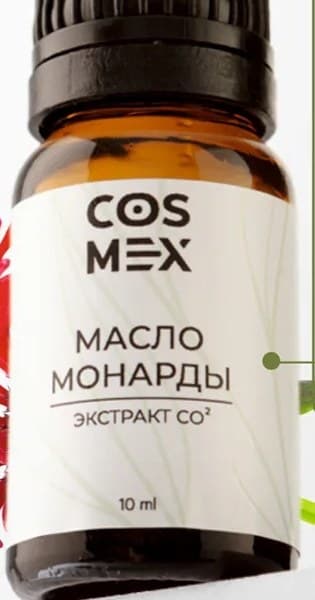
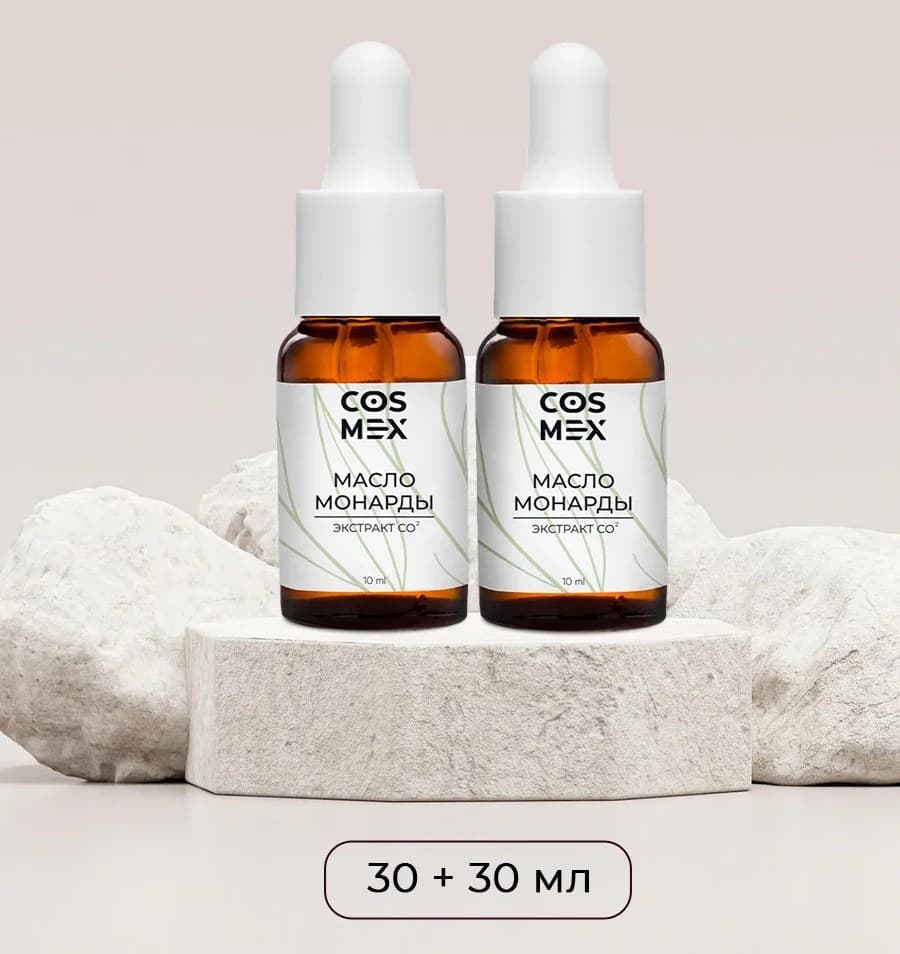
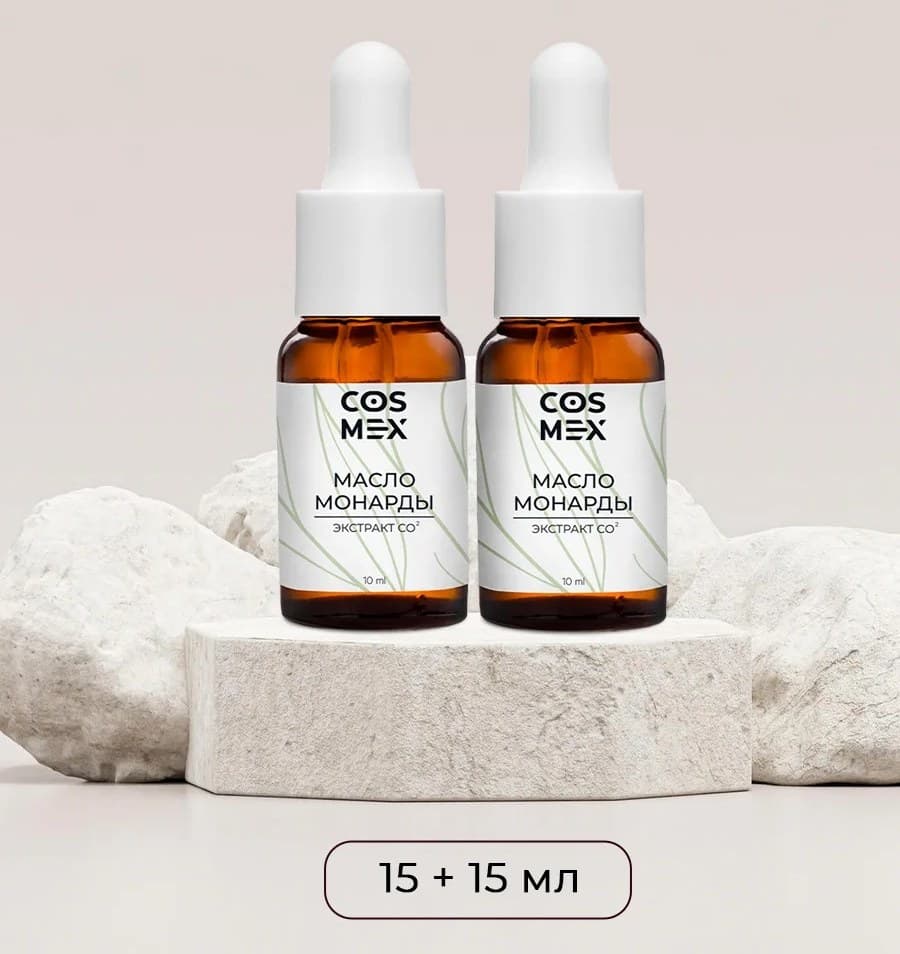
- Cosmex Monarda Oil — CO₂ monarda extract, a concentrate: use on skin and scalp only when diluted in a carrier oil.
- Scalp care sets with monarda oil — Repair, Trichology, or Daily shampoo plus a bottle of monarda for pre-wash scalp treatment (diluted).
- COSMEX NOIR Fragranced Shower Gels — no monarda in the formula; these are about scent, for those who want a herbal or spicy trail after showering.
In short: monarda is a concentrated oil with a bold, herbal character. Not a decorative fragrance ingredient — a genuine active component that demands respect for dilution ratios. Use it for a dandruff-prone scalp, for cuticles, and for rough skin, always diluted — and it will reward you with well-groomed nails and a healthier scalp. Anything that looks like a fungal infection, bacterial infection, or inflammation belongs in a dermatologist's office first.